
If you step onto your street in the morning, it is easy to feel like the city is a finished object. A parcel on the step, a van at the kerb, a stocked shop: they can look as if they were decided somewhere else, long before you arrived. This week’s episodes of What is The Future for Cities? podcast take that feeling apart. Tuesday’s research conversation (473R) works through Fulfilment of last-mile urban logistics for sustainable and inclusive smart cities: a case study conducted in Portugal, the 2022 paper by Diogo Correia, Cristiano Vagos, João Lourenço Marques, and Leonor Teixeira. On Thursday (474I), Laetitia Dablanc, urban planner and professor at the University Gustave Eiffel and head of the Logistics City Chair, looks at a goods system that already works and at the skill a city still needs. The shared thread is simple and demanding: the goods already arrive, the tools are already here, and what is scarce is the skill to use them.
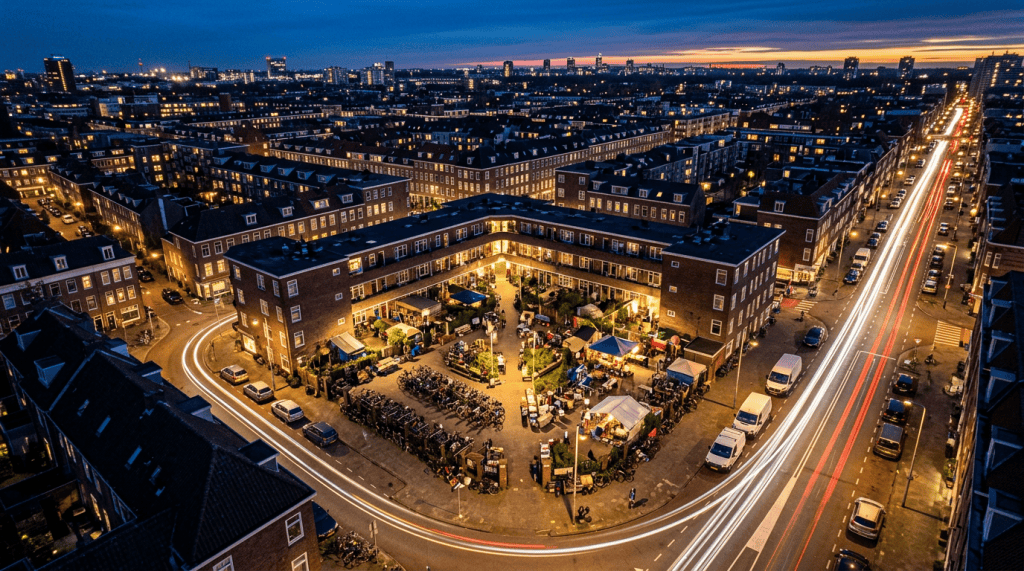
A city that cannot see the demand
The number that changes the argument is not the van. It is the screen. Over 76% of the Portuguese municipalities in the study said they lack tools for real-time visualisation. Only about 2% felt they would not struggle to mobilise a 15-minute response. The authors still test a method in Lisbon. DBSCAN groups needs inside a 1.5 kilometre radius. Uber’s H3 grid suggests where a small stock point could sit. Valhalla draws the distance a bike can travel in 15 minutes on real streets, not as a circle on an empty map.
That map is only useful if someone can see who needs what, and if competing operators will share the picture. Almost 88% of policymakers were confident they could meet needs with dynamic cooperation. In the same survey, 51% named private human resources as the biggest dependency, and 27% named private logistics coordination. Seventy-four Portuguese e-commerce companies could not offer instant delivery on their own. Lisbon’s hills, cold storage, and GDPR sit on top of that. Proprietary vans account for up to 21% of CO2 in residential areas. The shared network can be drawn. In most of these municipalities, the radar is still missing.
The goods are here. The costs are quieter.
Dablanc starts from the opposite surprise. Planners and elected officials rarely talk about urban logistics because the goods arrive. She splits the field in half, warehousing and transportation, facilities and vehicles. Stop either side and homes, offices, and shops thin out within days. Success is why the costs are hard to campaign on. She ranks them: air quality, then noise, then CO2, with the social bill beside the environmental one. Warehouse and delivery jobs let people into the city who often have no other door, including people without the right papers, and the work is still too hard.
E-commerce is the claim that cuts against the usual story. She says it is much better for CO2 than store retail, because the shopping trip and the heated shop fall away. The harm she wants named is the move from shop work to warehouse and delivery work. A city can cut carbon and still make the job worse.
What a robot changes, and what it does not
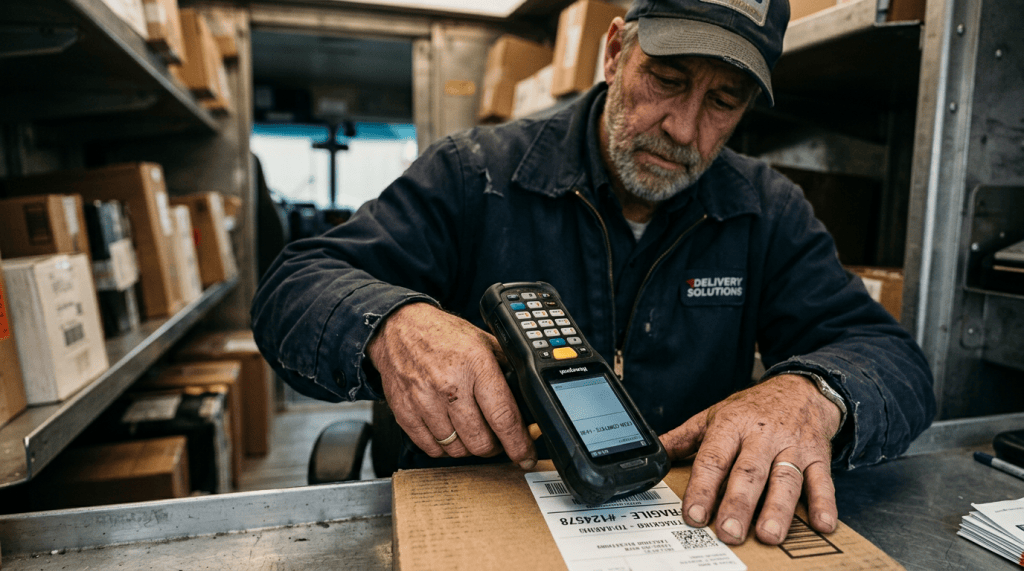
She does not think warehouse automation is about to erase the headcount. There are fewer unqualified jobs and more skilled ones, and cities are poor at the training, especially for people who arrived to do the delivery work as it exists now. Robots take the worst handling. She has watched warehouses where it is easier to be an Amazon worker than it was 15 years ago. Training today’s workers into the new jobs, she says, is not going to be easy. Drone delivery is still a pilot, not a substitute for the van. The scarce part is the skill, not the machine.
Where the skill gathers
She studies cities of more than a million permanent residents, and mega-regions she treats as one connection, up to about 40 million people, from the area around Shanghai to the northeast of the United States. Logistics gathers in those large cities even where land is cheaper somewhere else. The skills, the staff, the investors, and the highways are there, and so are the campuses, the hospitals, and the city halls. An idea can start in a smaller place. Making it ordinary still means reaching a big city.
Her role is narrow on purpose. She educates about 10 people a year, in the field, on visits, and at conferences. She wants them modest in the craft and able to have a new idea, because missing expertise is replaced one expert at a time.
The engineering is already in the street
She refuses the habit of describing urban technology as if it were still on order. In the last 10 years, solar panels have spread across cities. Vegetation grows where it did not. People have swum in the Seine for the past two years, and canals in Paris have opened too. She was critical of techno-solutions, and she now thinks the engineering is part of the answer. A big city, she says, does not need a combustion engine on its streets anymore. The tools are here. What lags is volunteerism, strategy, and a change of mind.
Europe is inside that change of mind. She is shocked by air quality in Indian cities even where, as in Mumbai, money is not the shortage. Heatwaves in France made climate something residents feel. That is why she is hopeful. The planner who can use the tool is the constraint she keeps naming. Transport models that still omit e-commerce, cargo cycles, and meal delivery make a city confident about a future the model cannot see.
Portuguese municipalities are being asked to run a 15-minute last mile, and most of them cannot see the demand (473R). Over 76% lack real-time tools, so a careful map still has no radar. Laetitia Dablanc says (474I) the goods already arrive, which is why the real costs stay quiet: air, noise, and warehouse and delivery work that is still too hard. E-commerce can cut CO2 compared with a shop, and still shift people into worse jobs. Robots take the worst of those jobs, and training the people who do them now will not be easy. The skill to use what already exists gathers in large cities, and she puts her own effort into about ten people a year. Solar panels, new vegetation, and a Seine people can swim in are already here. The lag is not a missing machine. It is the planner, and the transport model that still cannot see the city it is supposed to describe.
What already works in the delivery you received this week, and what would you want the city to be skilled enough to change?
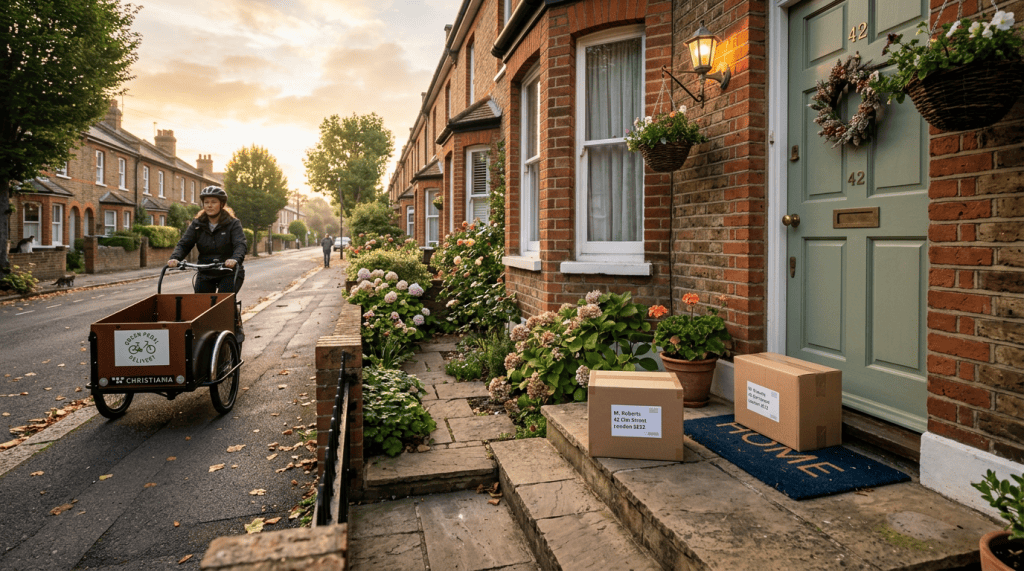
Next week we are investigating the value of public spaces with Howard Kozloff!
Share your thoughts – I’m at wtf4cities@gmail.com or @WTF4Cities on Twitter/X. Subscribe to the What is The Future for Cities? podcast for more insights, and let’s keep exploring what’s next for our cities.
If you would like to support the podcast, check out the Building Better Cities book or our Patreon!


Leave a Reply