A clogged artery gets a stent. Blood moves again in that one place. The rest of the body can stay sick.
That is the picture this week’s research episode (463R) of What is The Future for Cities? uses for Barcelona’s superblocks. A 2025 BMC Public Health paper by Perez and colleagues looks at three early interventions: Poblenou, Sant Antoni, and Horta. The city slowed traffic inside three-by-three grids to about 10 kilometres per hour and pushed through-movement to the perimeter. You can create a quiet square and still leave the strain on the next street. Thursday’s conversation (464I) with Laura Reupke, CEO of BABLE Smart Cities, turns the same tension around. She is helping to make a superblock in her own neighbourhood, and she starts with health, with people missing from a standard traffic model, and with a stubborn kind of optimism: the future has to be liveable, because the alternative is not a plan.
Here are five lessons from both episodes.
A clean block is not the same as a healthy city
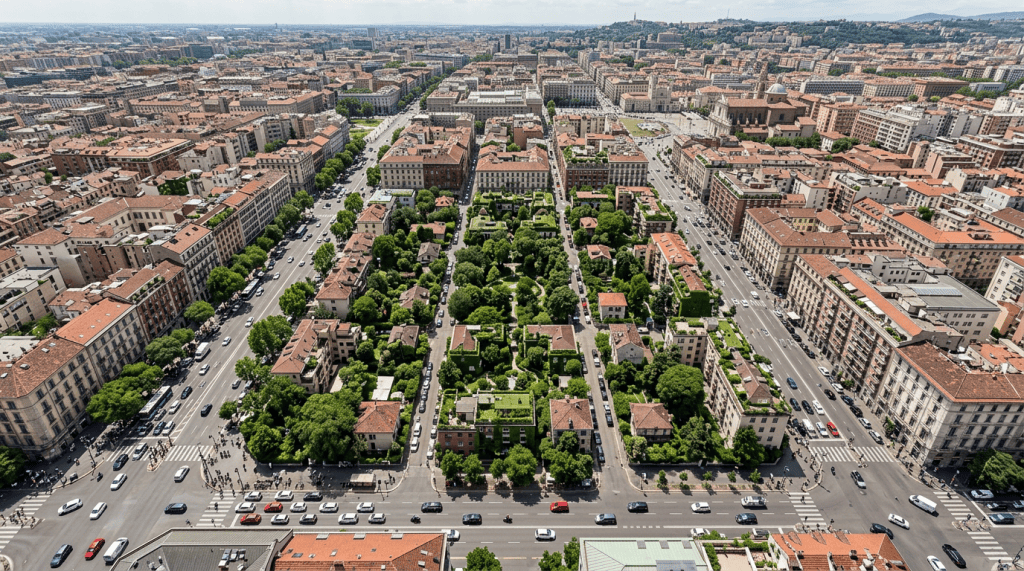
Sant Antoni is the result people quote. Inside the superblock, nitrogen dioxide fell by 25%. PM10, the soot that gets into lungs, fell by 17%. Residents talked about better sleep, more calm, more chance meetings.
Horta and the wider sampling tell a different story. Passive diffusion tubes across a larger area, including streets just outside the boundary, showed no overall significant air-pollution change. Focus groups in Poblenou already feared that outcome: if you live on the perimeter, you inherit the exhaust that used to be shared.
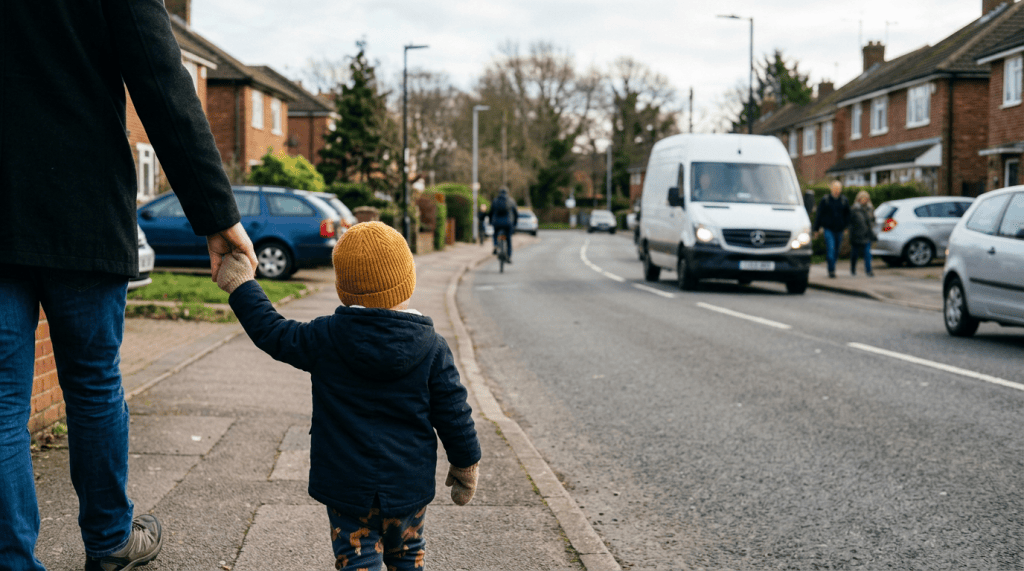
Who got left out matters as much as the percentages. Bus lines moved to the edge. For someone young and well, four extra blocks is a shrug. For an 80-year-old with groceries, it is a barrier. Teenagers in Poblenou said the space was not for them. Some women found the quieter plazas less safe at night, with fewer eyes on the street. Painted asphalt can also read as pedestrian priority, so families relax while vans still come through.
A stent can be the right first move. It is not a cure if the rest of the network keeps pumping the same volume of traffic around the new sanctuary.
Liveability starts with air, noise, and the right to move
Reupke does not start with street furniture. She starts with health.
Noise, air, and the freedom to move are not lifestyle extras. Electric cars are quieter, which helps, and they still take space. Movement is not only sport. It is whether a child can leave the house and reach a playground without an adult timetable. If kids only go out when a parent can take them, they move less.
That is the bridge between the paper and the interview. Barcelona’s better sleep and calmer streets are not a side effect. They are the point. The paper’s warning is that those benefits can be fenced. Reupke’s test is whether the whole neighbourhood can breathe and move.
Design for everyone is a practice, not a promise
Reupke has low patience for the sentence “we will not manage to cover everyone.” She calls that the wrong mindset. Where there is a will, there is a way. It takes more time, more conversation, more money. It is still possible.
She has tried a wheelchair on her own streets. She talks about people with epilepsy who cannot drive, people who cannot see, children who cannot be seen over the bonnet of an SUV. She talks about care trips, not only the commute from home to office that so much mobility was built around.
The method is practical. Citizens need spaces where they can feel what other people feel. Planners need to ask the people who will live with the change, including minorities, not only the loud majority. Companies that sell to cities still need to understand the end user, not only the procurement officer. Politicians need to think past one electoral term.
Oslo working with companies to replace hundreds of thousands of cars is her large-scale example. Neighbours gardening around 120-year-old trees is the small version of the same instinct. The Barcelona paper is the caution: a public square can still exclude.
We already know what works
Reupke’s first opportunity is blunt. We have solutions today. We know what causes the problem. We have it all. The missing piece is mindset: let’s just do it.
That does not mean it is free. Cycling space and urban trees sound small and still cost real money. The bottleneck is rarely a lack of pilots. Cities have run the pilots. Not all of them became the new normal. Exchange between cities is still thinner than it should be.
She also sees a movement: more citizens who care, more purpose-driven companies, more neighbourhood groups asking the city for something better. Ada Colau and Barcelona’s superblocks started in activism.
The uncomfortable part is the parking sentence. People will say politicians should act, then add that it cannot cost their space. Almost every urban change touches someone’s perceived freedom. That is why Reupke still wants more mayors who feel responsible for the people who will live there next, not only for the people who vote this term.
Today’s street is tomorrow’s inheritance
Asked if she is optimistic, Reupke does not offer a forecast. She offers a choice. She has to be. She wants to be. Everything else is not an option. She believes in a positive future, 100%, or she would not do the work.
Her working horizon is five to ten years, because improvement has to be visible now if people are going to stay in the work. The moral horizon is longer. What we decide today has an impact in 100 years. The 120-year-old trees outside her window only exist because someone planted them on purpose.
She does the work in two registers. At home: a neighbourhood superblock, community apps, and ordinary ways of making strangers less anonymous. At work: bridging cities and companies, and helping solutions find the right city instead of dying in a long sales cycle.
The request she leaves is simple. Join the movement with your own energy. Do not assume it is already lost.
A superblock can be a lung. It can also be a gated climate. The research (463R) says measure the perimeter, the night-time square, the bus stop, and the child in the shared space when a van appears. Laura Reupke says (464I) start with health, design for the person who cannot drive, and plant the tree now.
Which street in your city is still waiting for that first honest step?
Next week we are investigating sustainable last mile delivery with Anne Goodchild!
Share your thoughts – I’m at wtf4cities@gmail.com or @WTF4Cities on Twitter/X. Subscribe to the What is The Future for Cities? podcast for more insights, and let’s keep exploring what’s next for our cities.
If you would like to support the podcast, check out the Building Better Cities book or our Patreon!


Leave a comment