
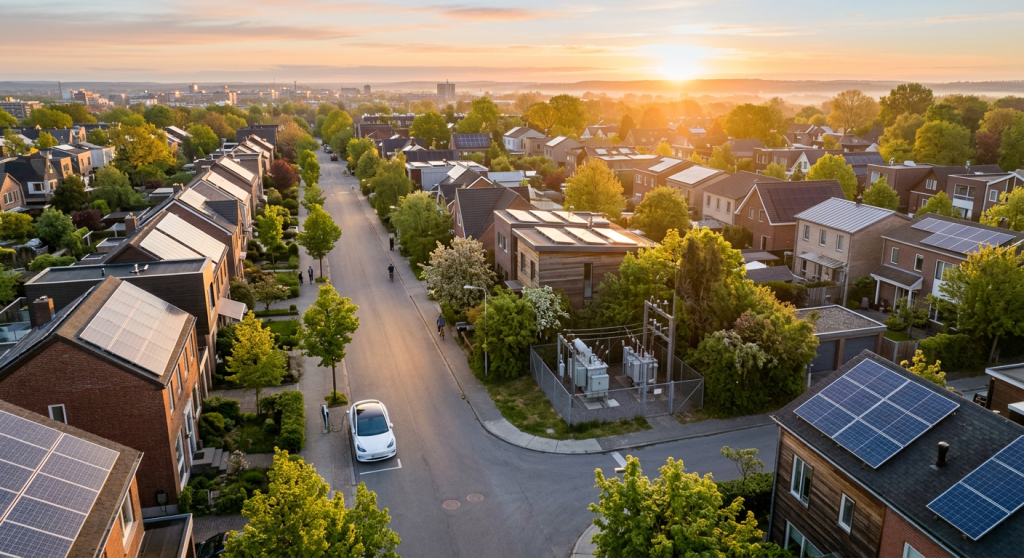
If a home battery keeps the hospital online during a winter storm, and the accounting system cannot put a dollar on that, what number have we actually written down?
This week on What is The Future for Cities? podcast that question ran through two episodes. Tuesday’s research debate (459R) unpacked the 2020 National Standard Practice Manual for Benefit-Cost Analysis of Distributed Energy Resources, a framework for valuing rooftop solar, home batteries, electric vehicles and smart thermostats against traditional utility investments. Thursday’s interview episode (460I), Karl R. Rábago, principal of Rábago Energy LLC, brought thirty-six years of energy work to the same ledger. Cities survive and thrive, he argued, when they right-size energy the way nature does: not wasting it, using what is necessary, and sharing what is left.
Five lessons held both conversations together.
Zero is still a number
The research episode opens with ice on the lines and a neighbour’s electric vehicle discharging into the local grid. Multiply that by a few thousand homes and the hospital stays online. Then the hosts ask what that action is actually worth.
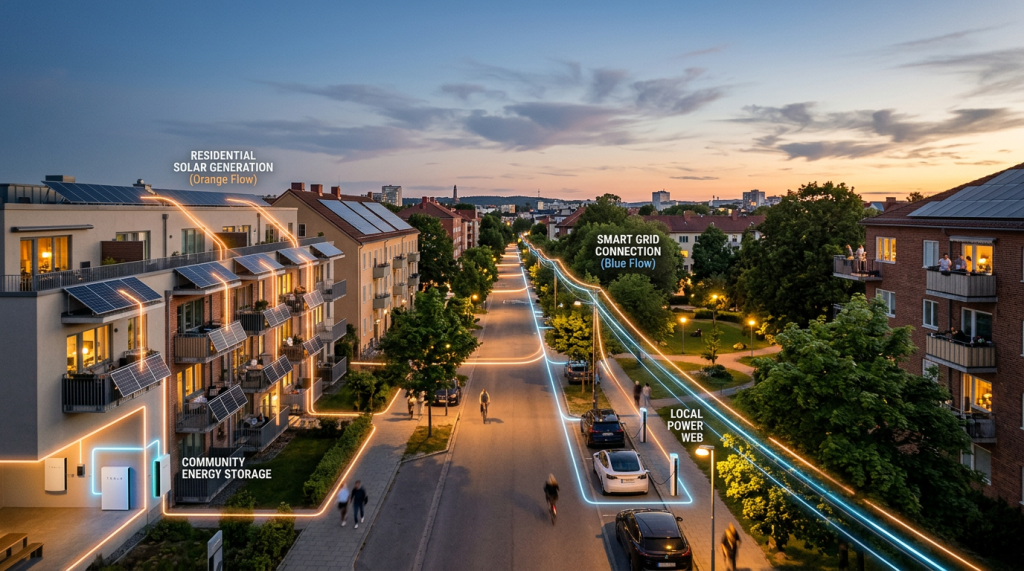
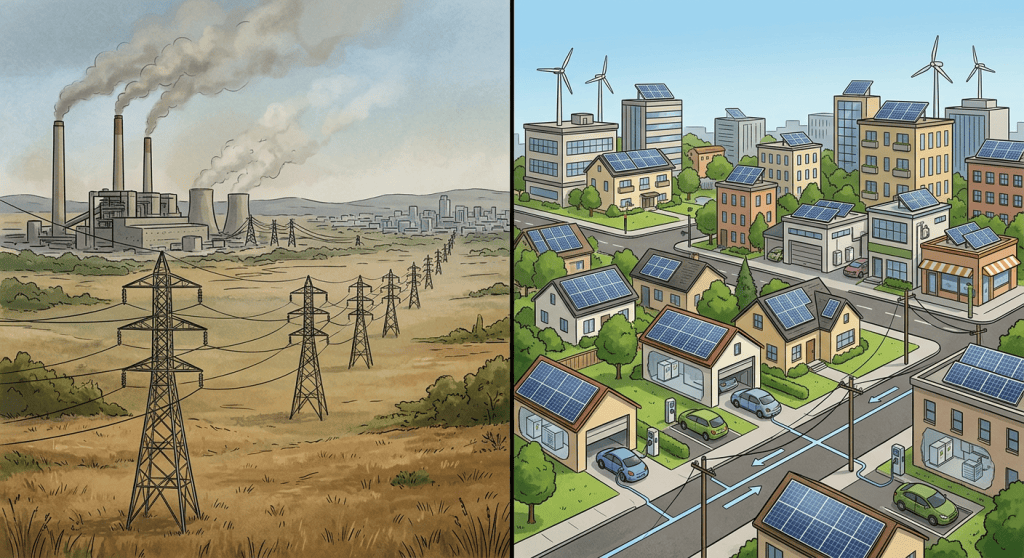
The old grid was a one-way water pipe. The new grid is a circulatory system: energy can flow back. If the ledger only measures water leaving the reservoir, it misses the health of the whole body. Refusing to price greenhouse gases, public health or resilience because they are “too hard” is not conservative accounting. It is entering a value of exactly zero. The manual’s position is blunt: a careful estimate is better than a false zero.
The other host warned that stuffing comfort or job creation into the same test as copper wire can politicise the maths, and can shift costs onto people who never got a battery. They converged on transparency. Principle seven requires the assumptions to be public. The next time the lights stay on because a network of batteries kicked in, the question is not whether the value exists. It is what is missing from the bottom line.
Cheap is not the same as low-cost
Rábago has a precise dislike for the word cheap. He does not want to live in cheap places. He wants cost low and value high. Cheap, to him, is trashy stuff that does not last.
Samuel Insull’s 1898 pitch in Chicago was bigger-is-better monopoly: give us the grid, we will make it cheaper. For a generation it worked. Then it did not. Rábago had to put Comanche Peak into Texas rates in 1993 at 12.5 billion dollars – seventeen times the original promise. A woman walked an oxygen bottle up the aisle of a public hearing and asked which of her pills she should give up so she could keep the lights on in Dallas.
The research episode makes the same point from the other side of the ledger. A ten-million-dollar substation can look cheaper than a nine-million-dollar neighbourhood of batteries if the test ignores the dirty peaker plant those batteries would have turned off at 5 pm. A program can also pass a benefit-cost test and still raise bills for people who cannot afford a battery. The manual insists those two measurements stay separate. Cities that collapse them will keep building the wrong grid.
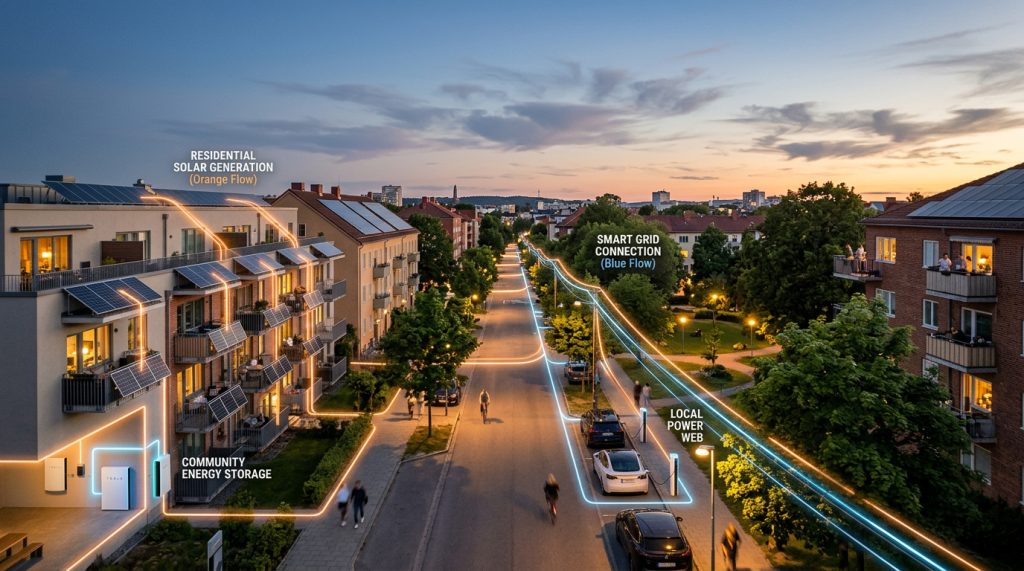
Your neighbour’s unused kilowatt hour is not waste
Rábago’s definition of distributed energy is geographic: everything below the last substation, usually below 69 kilovolts. It can support a nano-grid of one. With the right structure it can also share. When you go on holiday, your battery has room. Your neighbour is having a party.
In the early 1990s he called this universality. Today the industry says network effects. A telephone on the farm is good for the farmer, and for the doctor who does not have to drive out for a headache. Energy efficiency works the same way. The coal you do not burn is my atmosphere. Your cut in peak use is my lower system cost.
The research episode’s non-wires example is the same idea in dollars. Spend two million on neighbourhood batteries and smart thermostats instead of ten million digging up streets for copper. Discharge at the peak. Defer the substation. The eight million is the easy part of the ledger. The rest is whether we are willing to count the air.
Distributed energy is everything sized at the point of use
It is not just rooftop solar. Rábago lists storage, electric vehicles and their chargers, building electrification, building management, and energy efficiency – all of it sized at or near where it is used. That breaks the habit of assuming demand and building another plant to match. Demand becomes a resource you can shape.
Incumbents resist this, he says, because their economics are based on waste. He still thinks the technology wins. Bicycles beat cars in a city that is friendly to them. Rooftop solar beats coal, gas and nuclear plants. Local batteries beat the large-scale versions of the same idea. Amory Lovins called the shift the economics of cars, not cathedrals: the more you make of them, not the bigger you make each one, the cheaper each unit gets.
When he and colleagues modelled the continental United States down to one kilowatt, one square kilometre and five minutes, they found the country could fully electrify transport and building heat with zero-carbon resources by 2050 and save one and a half trillion dollars in utility system costs – by using the wires we have already paid for in both directions.
Aim for vernacular energy, not another cathedral
Rábago’s milepost is a distributed energy singularity: when the ambient density of local energy transactions matches the density of synapses in the human brain, about 150 billion per cubic centimetre. We are a long way from it. We can already see the shape.
The path is vernacular, not heroic. Germany already has about a million plug-in solar installations. A balcony panel can simply buy less from the utility, with no moving parts. An energy router, like the data router already in the house, would let people set preferences once instead of becoming their own energy managers. Electricity from a battery calculator once looked insanely expensive – until convenience and efficiency married, and a tiny strip of solar was enough.
The Stone Age did not end because they ran out of stone. The central-station model will not end because we run out of large plants. It will end because the cost becomes unbearable, and because something better is already sitting on the roof, in the garage, and on the balcony.
The two episodes (459R and 460I) do not ask cities to romanticise every rooftop. They ask us to stop writing zero in the ledger for things we know are not zero, and to treat energy as a layer we can share rather than a fire hose we can only open wider.
What would change on your street if the unused energy in the house next door counted as a resource – and if refusing to count it no longer counted as prudence?
Next week we are celebrating the 5th birthday of the podcast with a very special book summary and reflection episode!
Share your thoughts – I’m at wtf4cities@gmail.com or @WTF4Cities on Twitter/X. Subscribe to the What is The Future for Cities? podcast for more insights, and let’s keep exploring what’s next for our cities.


Leave a Reply