
This week’s episodes of What is The Future for Cities? podcast turn on a gap that is now hard to ignore. We can build extraordinarily sophisticated digital replicas of cities. We are much less good at getting those replicas into the rooms where planning actually happens. Tuesday’s research debate (457R) unpacked a 2025 systematic literature review by Shervin Azadi, Dana Kasraian, Pirouz Nourian and Peter van Wesemael. Thursday’s conversation (458I) with Ruthbea Yesner, Group Vice President at IDC, asked a more human version of the same problem. Cities, she says, are the fastest-growing and most economically important places on earth – and the most fiscally strained layer of government. The future is in that tension: whether we use new tools to decide better, or only to model more.
Zero out of forty reached the planning table
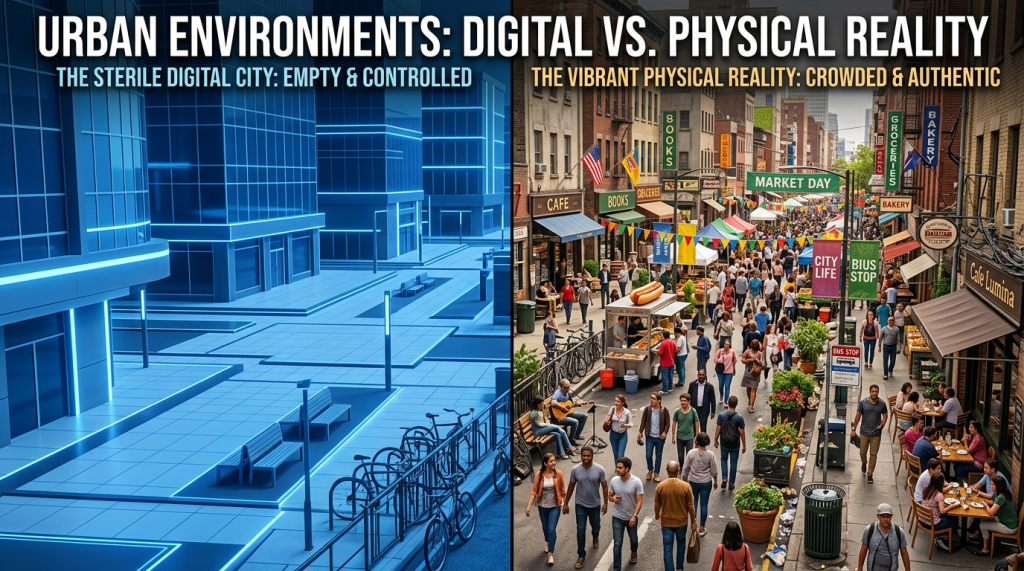
The review looked at 88 peer-reviewed projects from the last seven years, then at 40 articles that described actual implementations. Exactly zero of those 40 had been integrated into official city planning and decision-making. Eighty per cent had achieved interdisciplinary technical integration – water talking to energy, mobility layered over consumption. Seventy per cent included simulation. Those are not nothing. They are also not planning. One side of the debate named the pattern digital universalism: forcing a chaotic, political city into a single sterile digital frame. The thermometer analogy is the one that sticks. A model can measure heat perfectly and still treat a night market and an empty car park as the same place if they are both 75 degrees. Optimise only for vehicle throughput, and you can destroy the slow street a neighbourhood lives on while the model congratulates you for being efficient. The paper’s answer is an augmented urban planning agenda: interdisciplinary integration, plus residents inside the model, plus the twin as a legal part of government workflow. Until those last two exist, a digital twin is closer to a video game for urban engineers than to a planning tool.
Innovation is relative, and leapfrog is allowed
Yesner’s first move is definitional. When people asked her for the smartest city in the world, she asked what a city is. Her working definition is broad: a geographically defined area with its own governing authority and a concentration of people, jobs and economic activity. Stadiums and campuses can count. Innovation, she says, is equally relative. What is new for one community may already be ordinary somewhere else. It involves newness, experimentation and iteration – but it does not have to be new in the world, and it does not have to be sequential. An African city that goes to mobile payments without a generation of desktop PCs is not skipping homework. It is iterating faster on what other cities already learned. The most sophisticated replica is not automatically the most innovative planning act. The innovative act is the one that is new and useful for that community.
The constraint is financing, not imagination
Yesner is clear about what is blocking city modernisation. A lot of a city’s budget goes to maintaining old systems. The constraint on the future of cities is not imagination. It is financing. That pressure is already pushing governments from capital-heavy infrastructure toward cloud and as-a-service models. A second obstacle is organisational. Transportation, parks and every other department can do their own job well and still fail to share data. Twenty departments that cannot talk to each other will not produce a useful city-wide twin. The review found a matching social gap. Only three of those 40 implementations involved actual residents. Twenty-nine used hypothetical stakeholders. A water engineer and a neighbourhood activist do not even mean the same thing by efficiency. Ignoring that clash does not save time. It pushes the conflict downstream, after the model has given everyone a false sense of security.
Sustainability can become a budget argument
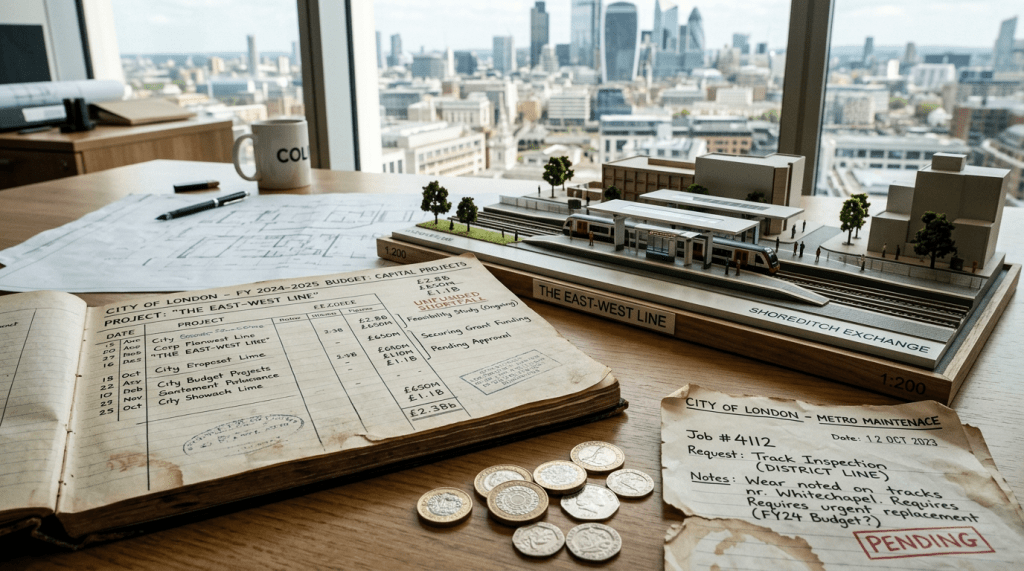
One of Yesner’s more hopeful moves is to refuse the idea that climate work and fiscal work are enemies. Cities are running out of water and struggling with heat. The flip side is conservation, reuse, more efficient sensors – and even buy-nothing cultures at a larger scale. Climate resilience and cost savings can converge. Sustainability technology could become a budget argument, not only an environmental one, if we can actually see the outcomes, the savings and the health benefits. That is a different conversation from asking a strained city to spend more because it is the right thing. A twin that can show a heating network or a logistics fleet saving money before a truck is bought is suddenly speaking the language city halls already use.
Simulate the policy before you pass it
Yesner’s third opportunity stitches the week together. Artificial intelligence and edge devices can build a fuller picture of how people and goods move, and how we manage crises. Digital twins, used well, let cities simulate and test decisions before they are enacted, waste less money, and make better calls. If used right and scaled properly, she says, the use cases could be fascinating. The research debate is the caution next to that sentence. Simulation without residents, without a legal place in the workflow, and without protection for sensitive infrastructure data, is still a lab. The DUET project’s T-cell architecture – querying government data without copying it into the open twin – is cited as a rare security pattern, not a standard. Yesner’s own role is to help cities cut through vendor hype and reduce the risk of buying the wrong thing. That is the adult version of this conversation: not whether the replica is impressive, but whether it helps a fiscally strained government decide in public, with residents, before the concrete is poured.
The two episodes (457R and 458I) do not ask us to stop building models. They ask us to stop treating a beautiful replica as proof that a decision has been improved. Count whether the twin reached a planning table. Ask whether innovation is new for that community. Treat finance and silos as the real constraint. Make sustainability argue in budget language. Then simulate the policy – and only trust the simulation if the people who will live with it helped set what it values.
What would have to change in your city before a digital twin was allowed to influence a real decision?

Next week we are investigating decentralised energy systems with Karl R. Rábago!
Share your thoughts – I’m at wtf4cities@gmail.com or @WTF4Cities on Twitter/X. Subscribe to the What is The Future for Cities? podcast for more insights, and let’s keep exploring what’s next for our cities.


Leave a Reply