This week on the What is the Future for Cities? podcast we explored how both natural forests and urban tree canopies can adapt to rapid climate change. Episode 447R presented a lively debate based on a major 2019 study of 125 tree species in the eastern United States, while episode 448I featured an in-depth conversation with urban forester and municipal arborist Jasen Johns. Together they offered practical wisdom for anyone interested in resilient cities and healthy ecosystems.
Climate change is shifting habitats faster than trees can naturally follow
Trees have migrated throughout history by dispersing seeds, but the process is slow – typically around 50 kilometres per century. Current climate velocity under high-emission scenarios is far outpacing this natural rate. The research debate highlighted how models such as DISTRIBUTE and SHIFT show dramatic gaps between future habitat suitability and colonisation potential for many species.
In places like the Allegheny National Forest, species such as red spruce and black ash may lose suitable climate conditions by 2100, while southern species could thrive if given a helping hand. This reality challenges traditional “hands-off” conservation approaches and forces us to confront difficult questions about intervention.
We need thoughtful strategies for species movement, not blanket solutions
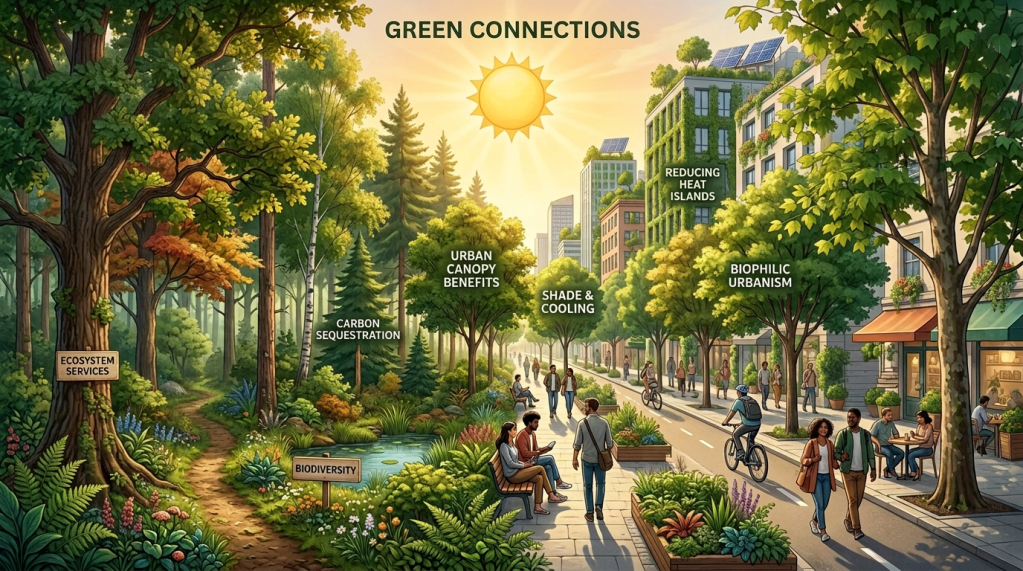
The 447R debate contrasted assisted migration (deliberately moving species to new suitable areas) with infill strategies (strengthening locally rare but already-present species) and active silviculture such as prescribed burning to help oaks regenerate. Both sides acknowledged risks: introducing new species could create future invasives, yet doing nothing may lead to canopy collapse and biodiversity loss.
The discussion emphasised evaluating species carefully – not all will be equally valuable or well-behaved in new locations. Foundation species like oaks, which support hundreds of moth and butterfly species, deserve particular attention because their decline could trigger cascading food-web failures.
This lesson applies globally: whether in Australia, Europe or North America, land managers must weigh local ecology, microrefugia and long-term monitoring when considering any form of assisted migration.
The 3-30-300 rule offers a practical framework for urban forests
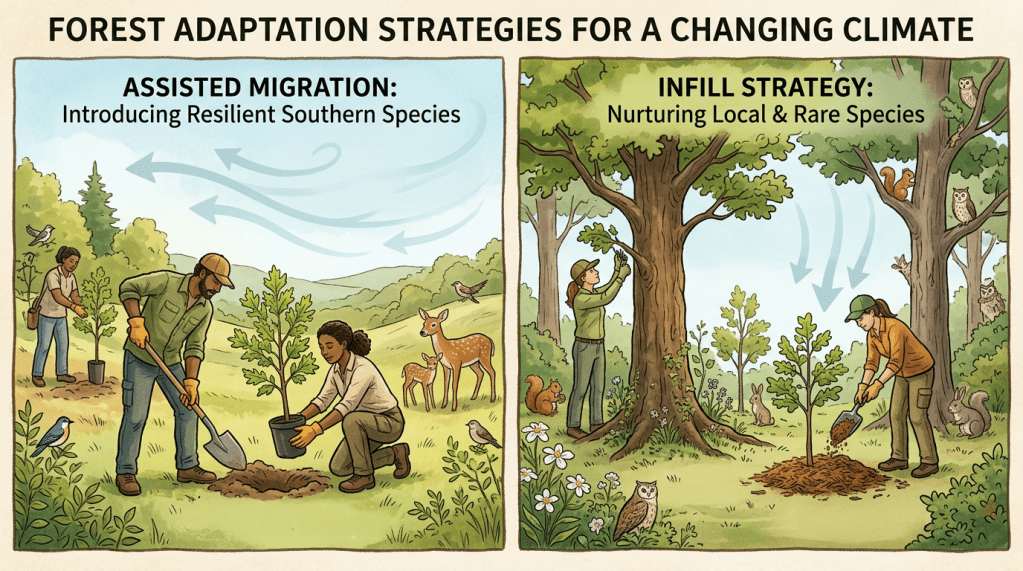
In the interview with Jasen Johns we learned about the widely adopted 3-30-300 model: every home, school or workplace should see at least three trees from the window; every neighbourhood should aim for 30 percent tree canopy; and every resident should live within 300 metres of a quality park or green space.
Johns explained that this rule aligns with World Health Organization recommendations for healthy cities and provides measurable targets for planners and communities. Canopy volume (measured with modern tools like LiDAR) matters as much as simple coverage, especially for cooling urban heat islands.
Urban forestry is a humanistic project that balances development and nature
Johns made a compelling case that greening cities is fundamentally about improving human habitability – physical health, mental wellbeing and social connection. He described how thoughtful tree placement delivers real utility: shade for pedestrians, flood mitigation in riparian zones, cleaner air, and even support for active transport.
Importantly, development and green infrastructure are not mutually exclusive. With innovations such as Silva Cells, helical piers and better zoning, cities can retain mature trees or create space for new ones even in denser housing projects. Johns also stressed the value of near-native species to build climate resilience while minimising invasion risk.
Climate ruggedisation through green jobs and community stewardship creates genuine opportunity
Rather than despairing about climate impacts, Johns encouraged proactive “ruggedisation” – designing systems that anticipate change. Examples include using plants for natural wastewater treatment, restoring degraded sites, and creating green-collar jobs in maintenance, restoration and monitoring.
He highlighted the importance of sense of place, community forestry events and food forests as ways to strengthen social bonds. Urban forestry, he noted, is not just about trees – it is about people. Listening to residents, building trust and creating shared stewardship opportunities matter as much as technical solutions.
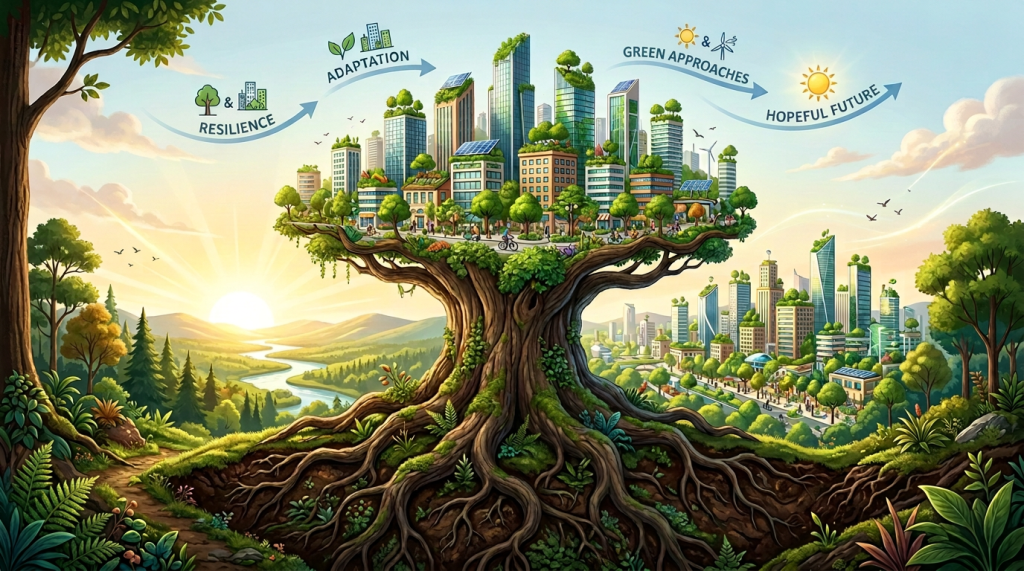
These two episodes (447R and 448I) reinforced a consistent message: the old “do nothing” approach is no longer viable. Whether in vast natural forests or dense city streets, we must become more intentional stewards of our tree canopy. The research debate provided scientific grounding and honest acknowledgment of trade-offs, while Jasen Johns offered practical, hopeful pathways already being implemented in cities like Seattle.
The future of cities will be greener – but only if we act thoughtfully, measure progress, engage communities and learn from both ecological science and local knowledge.
Together we can help shape greener, more resilient cities and forests for the generations to come.
Next week we are discussing the future of urban governance with an international panel!
Share your thoughts – I’m at wtf4cities@gmail.com or @WTF4Cities on Twitter/X. Subscribe to the What is The Future for Cities? podcast for more insights, and let’s keep exploring what’s next for our cities.


Leave a Reply