
This week the What is The Future for Cities? podcast explored one of the most important questions facing cities: can we grow our economies while successfully addressing climate change, or must we deliberately reduce consumption? Episode 419R presented a sharp research debate grounded in the 2025 paper by Phoenix Eskridge-Aldama, Aden Stern, Anna Vaughn and Diana Stuart, while Episode 420 brought practical optimism through Josh Dorfman’s experience as a climate entrepreneur and founder of Plantd and host of the SuperCool podcast. The episodes together delivered five clear lessons that tilt strongly toward green growth as the more pragmatic and hopeful route for urban futures.
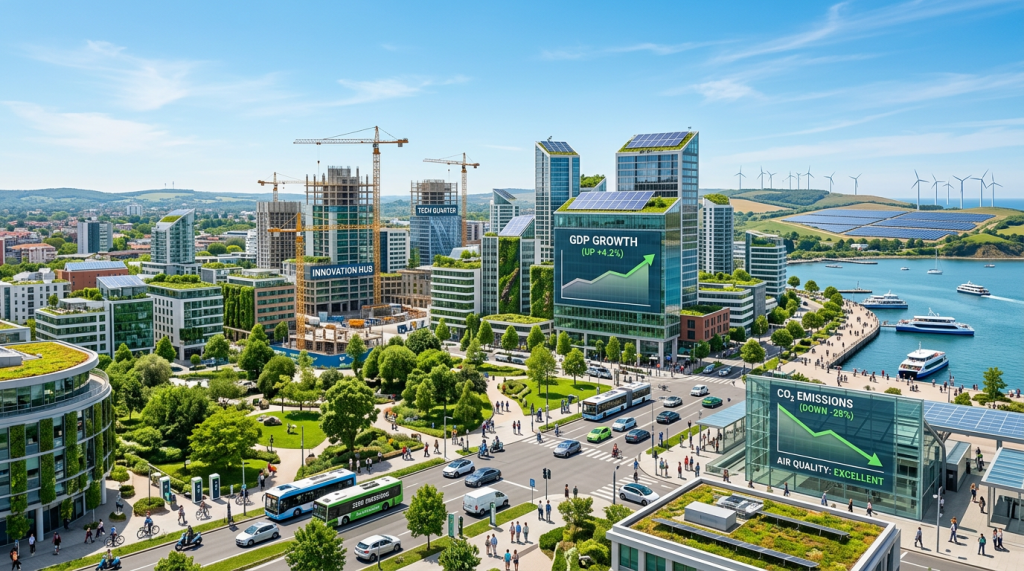
The debate is real, but green growth has momentum
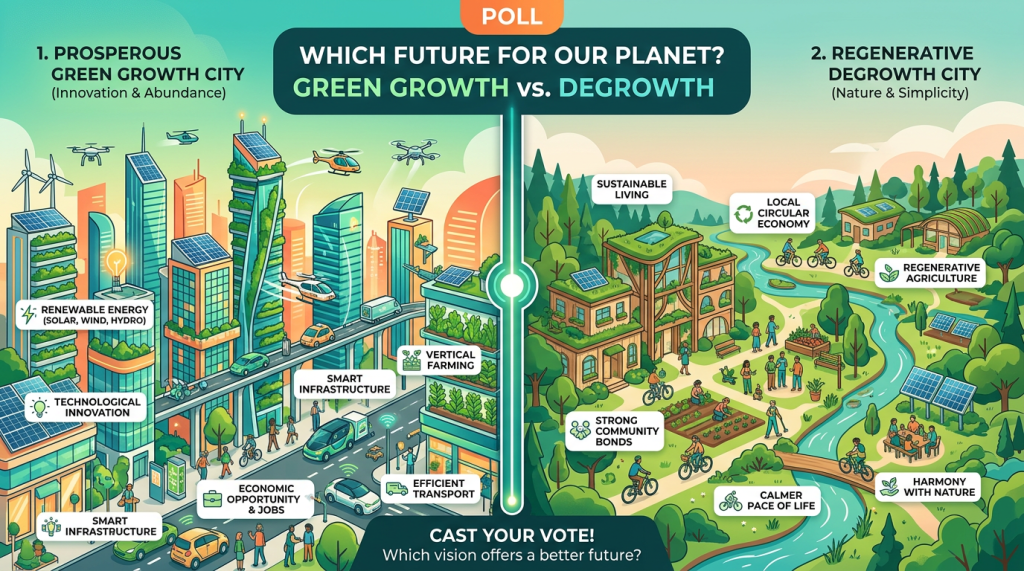
The research debate opened with a striking fact: in 2023 the world added more renewable energy capacity than ever before, yet global fossil fuel emissions still rose by 1.1 percent. This highlighted the central tension — can economic growth and environmental protection coexist? Green growth argues they can, through rapid deployment of clean technology, structural shifts in energy systems, and continuous efficiency gains. Degrowth calls for a planned contraction of resource use in wealthy nations to respect planetary boundaries.
While both perspectives deserve attention, the evidence presented for green growth was compelling. The debate showed that 32 countries have already achieved absolute decoupling — their economies grew while production-based emissions fell. This demonstrates that aggressive greening of electricity grids and widespread electrification can break the historic link between wealth and pollution. Green growth treats economic expansion not as the enemy, but as the engine that can fund the multi-trillion-dollar transition we need.
Decoupling is happening and technology is accelerating it
The research made clear that absolute decoupling is no longer theoretical. Countries that invested heavily in renewable energy and electrification are already seeing their economies expand while emissions decline. Green growth advocates point out that we are still in the early “messy middle” of the S-curve of technological adoption. As battery storage, grid infrastructure, and clean technologies reach critical mass, fossil fuels will be priced out naturally.
Josh Dorfman reinforced this optimism with real-world examples. His company Plantd turns fast-growing grasses into carbon-negative building materials that sequester more carbon than traditional timber. Geothermal systems heating and cooling high-rises in Brooklyn, induction cooktops that outperform gas, and protected bike lanes that improve daily life while cutting emissions all show that green growth solutions can make life better, not harder.

Wellbeing improves when we choose green growth
One of the strongest arguments for green growth is its focus on raising quality of life rather than asking people to sacrifice. The research noted the Easterlin paradox — happiness in wealthy nations has flatlined despite decades of GDP growth. Josh Dorfman offered a compelling alternative: the same actions that cut carbon often deliver immediate benefits. Mayors he has spoken with worldwide understand this instinctively. Planting trees for shade, building protected bike lanes, improving public transport, and creating pedestrian-friendly streets make cities more liveable while reducing fossil fuel dependence.
Crucially, these improvements do not require degrowth-style contraction. Instead, they harness innovation and market incentives to create “pockets of delight” that people genuinely want.
Innovation and industry are already delivering abundance
Josh Dorfman’s examples painted a vivid picture of green growth in action. From carbon-negative materials to geothermal buildings that reduce grid pressure and deliver better economics for developers, the pattern is clear: when solutions are designed to cut carbon, save money, and improve daily life simultaneously, adoption accelerates naturally. He stressed that the future is already here — it is simply not evenly distributed. Cities that remove barriers and support pragmatic innovation are proving that economic vitality and climate progress can reinforce each other.
This stands in contrast to degrowth, which risks political resistance and economic disruption. Green growth aligns with human nature by offering progress rather than contraction.
Individuals play a vital role in enabling green growth
Josh Dorfman delivered one of the most practical takeaways: individuals must “stand at the door of city hall and not let the a-holes inside.” In other words, citizens need to show up, support good policies, and clear resistance so that innovative solutions can move forward quickly. Whether advocating for bike lanes, backing local climate-tech projects, or simply choosing better products, everyday actions help create the political and social runway that green growth needs to scale.
The five lessons point clearly toward green growth as the more viable and inspiring route. Technology and innovation are already delivering solutions that cut emissions while raising quality of life. Decoupling is occurring in real economies. Market incentives and profit motives can accelerate adoption far faster than calls for sacrifice. Cities, with their density of people, talent, and decision-making power, are the ideal scale at which to test and spread these solutions.
While the research debate rightly warned about rebound effects and biophysical limits, Josh Dorfman’s grounded optimism showed that green growth does not require blind faith in unproven technologies. It requires pragmatic action, smart policy, and openness to abundance. By focusing on making cities more liveable, connected, and delightful, we can solve climate challenges without asking people to accept a lower standard of living.
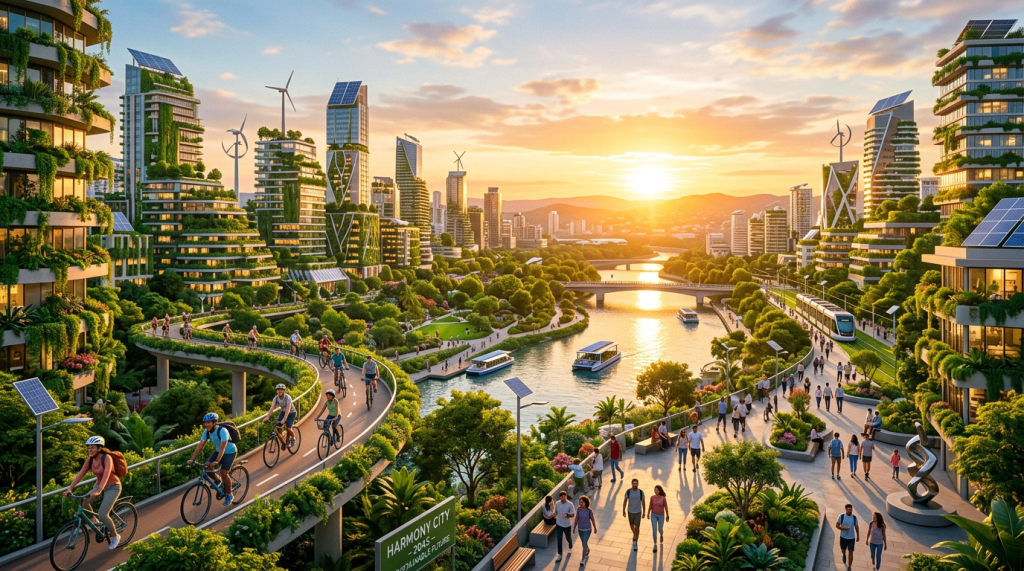
This week left a clear message: we do not have to choose between prosperity and planetary health.
With the right innovation, policy support, and citizen engagement, green growth offers a genuinely hopeful path toward resilient, abundant, and thriving urban futures.
What resonated most with you — the evidence of decoupling, Josh’s real-world examples, or the call for citizens to clear the runway for progress?
Next week we are discussing the scaling of cities, with the help of Greg Lindsay!
Share your thoughts – I’m at wtf4cities@gmail.com or @WTF4Cities on Twitter/X. Subscribe to the What is The Future for Cities? podcast for more insights, and let’s keep exploring what’s next for our cities.


Leave a Reply