
This week on What is the Future for Cities? we took a close look at autonomous vehicles (AVs) and their potential impact on urban life. Tuesday’s Research episode (439R) featured a thoughtful debate unpacking a 2025 academic paper on how AVs interact with classic urban transport problems. Thursday (episode 440I) brought an in-depth conversation with John Rossant, Founder and CEO of CoMotion, who shared his perspective on the broader mobility revolution, city design, regulation, and what it takes to create places that truly work for people. Across both episodes, several clear themes emerged: practical insights for anyone thinking about how technology, policy, and human behaviour will shape the cities of tomorrow.
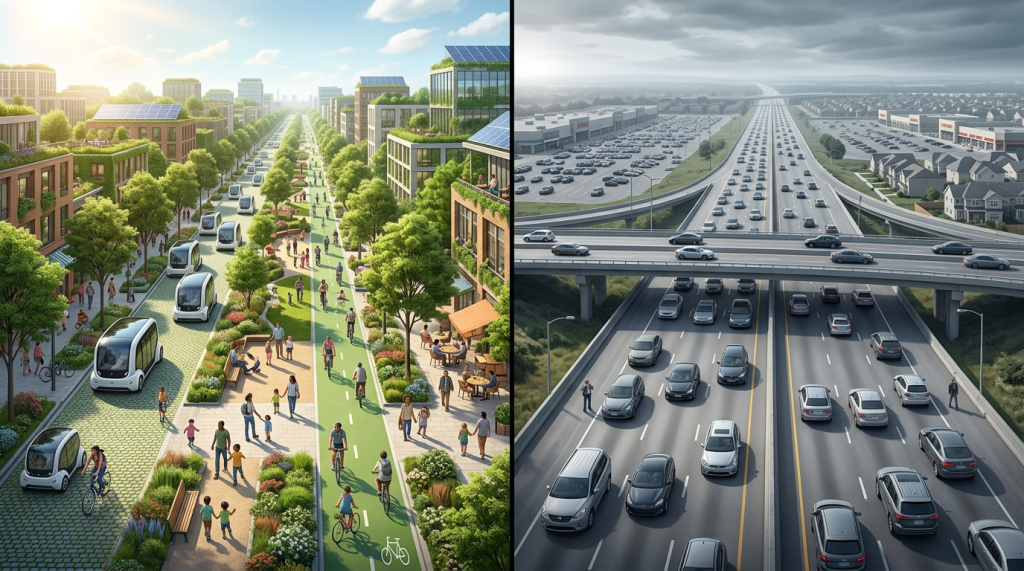
Lesson 1: AVs offer real technological wins, but without the right systems they risk making congestion, sprawl, and other problems worse
The research debate highlighted impressive data: significant reductions in crashes, smoother driving that cuts fuel use, and the theoretical potential of platooning to dramatically increase road capacity. At the same time, it stressed the danger of rebound effects. When travel becomes effortless and cheap, people tend to travel more – often longer distances. This can lead to more vehicle miles travelled, including empty “ghost” runs, and ultimately more urban sprawl rather than less.
A major takeaway is that private ownership of AVs may not deliver the hoped-for benefits on its own. Modelling suggests positive outcomes for traffic and space use are far more likely when private vehicles make up only a small share of the total fleet and when services are organised around shared fleets and mobility hubs. Real-world pilots, such as station-based shuttles that keep most residents within a short walk of a stop, show one way to balance convenience with broader urban goals.
These findings remind us that technology is a powerful tool, but its effects depend heavily on the surrounding systems of planning, policy, and service design.
Lesson 2: Mobility functions as the metabolism of the city – changes here ripple through everything else
John Rossant described mobility as the metabolism of urban life. When how we move changes, it affects where we can live, how we work, what we breathe, who we meet, and even the physical form of the city itself.
We are currently in the early stages of a major shift involving electrification, autonomy, shared services, and connectivity. The goal many share is moving beyond the post-war era in which cities were largely designed around private cars. The emerging vision is one of cities designed first for people – with more space for walking, cycling, green areas, and social life.
This perspective helps explain why seemingly technical questions about vehicles quickly become questions about housing, public space, and health. It also underscores why cities that get mobility right can unlock wider improvements in liveability and resilience.
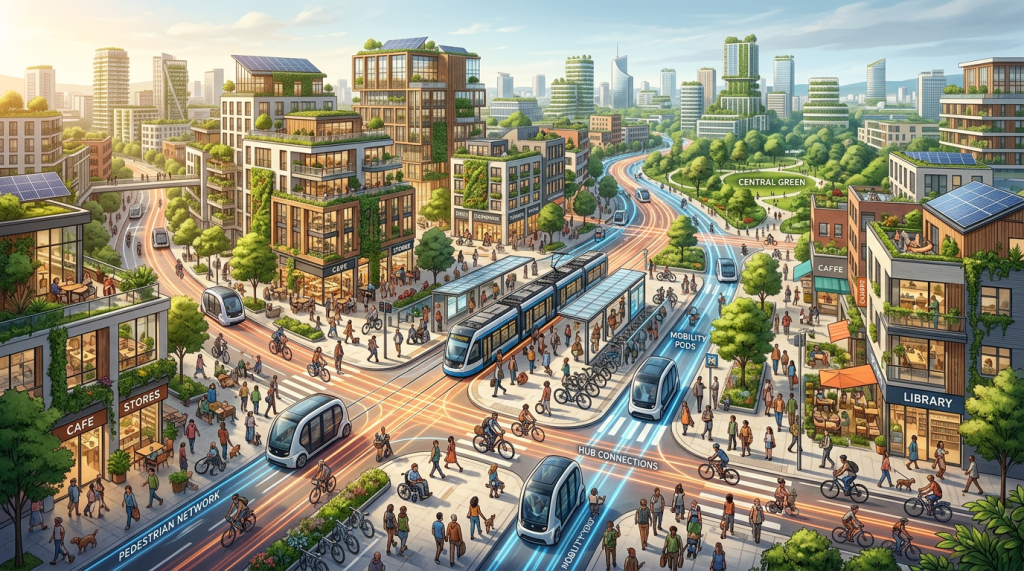
Lesson 3: The best cities combine visionary planning with organic, citizen-driven evolution
Great urban places rarely emerge from one approach alone. Historic examples show the value of strong top-down vision – think of the transformation of Paris or the grid plan that shaped Manhattan’s growth. At the same time, lasting success often depends on residents actively shaping their environment over time.
One powerful illustration is Amsterdam in the 1970s. When the city was heading toward a more car-dominated future, residents pushed back. The result was a much more livable, dynamic city that has become a global model. This blend of structure and adaptability appears again and again in successful places: clear long-term direction paired with the flexibility for communities to fill in the details and respond to changing needs.
This lesson is encouraging. It suggests that even large, complex cities can improve significantly when both leaders and citizens stay engaged.
Lesson 4: Smart regulation can enable innovation and positive outcomes rather than simply slow things down
A recurring theme was the importance of thoughtful policy. Regulation that is poorly designed can create barriers, drive up costs (as seen in some housing markets), and frustrate progress. However, well-crafted rules can steer technology toward desirable ends – for example, by encouraging shared fleets, protecting public space, or setting standards that support safety.
John Rossant spoke about emerging conversations around “smart regulation” and abundance thinking: the idea that efficient processes and enabling frameworks can unlock growth and problem-solving instead of getting in the way. The same principle applies to mobility. Rules that incentivise shared, efficient services and discourage wasteful empty miles are likely to produce better results than either a completely hands-off approach or overly rigid restrictions.
The challenge is finding the right balance: enough structure to guide outcomes, but enough flexibility for innovation to flourish.
Lesson 5: A hopeful but clear-eyed approach to technology, combined with active citizenship, offers the best path forward
Both episodes reflected a form of techno-optimism grounded in realism. Technology – including deep tech advances in batteries, solar, propulsion, and autonomy – can deliver genuine benefits, from restoring personal mobility to reducing emissions and improving safety. At the same time, new tools bring new risks, including around privacy, surveillance, and unintended behavioural changes.
John Rossant was explicit about not wanting to live in a city where technology serves mainly to monitor residents rather than serve them. He also emphasised a simple but powerful message: “Don’t wait for the city to happen to you. We live in cities. We have to be engaged urban citizens… It’s up to us.”
This combination of enthusiasm for progress and vigilance about side effects, paired with personal responsibility for the places we live, feels like one of the most actionable takeaways from the week.
This week’s episodes (439R and 440I) reinforced that the future of cities will not be determined by any single technology or policy in isolation. It will emerge from the interplay of innovation, thoughtful regulation, integrated planning, and the daily choices of engaged residents.
Autonomous vehicles illustrate the point perfectly: they bring exciting capabilities, yet their ultimate contribution depends on the systems we build around them.
Broader mobility shifts offer a chance to reclaim space, improve health, and design places around people – but only if we actively steer the transition.
Next week we are discussing infrastructure and water reuse with Darren Flynn!
Share your thoughts – I’m at wtf4cities@gmail.com or @WTF4Cities on Twitter/X. Subscribe to the What is The Future for Cities? podcast for more insights, and let’s keep exploring what’s next for our cities.


Leave a comment