This week on the What is The Future for Cities? podcast, we explored a powerful shift in how we think about architecture and cities – moving beyond merely sustainable design (doing less harm) to truly regenerative approaches that actively restore ecosystem services and reconnect humans with nature. Through a research debate on the 2019 “Biodiver-Cities” paper in episode 437R and a deep conversation with regenerative designer Joris de Leeuw from Protopia Studio in episode 438I, several important ideas emerged.
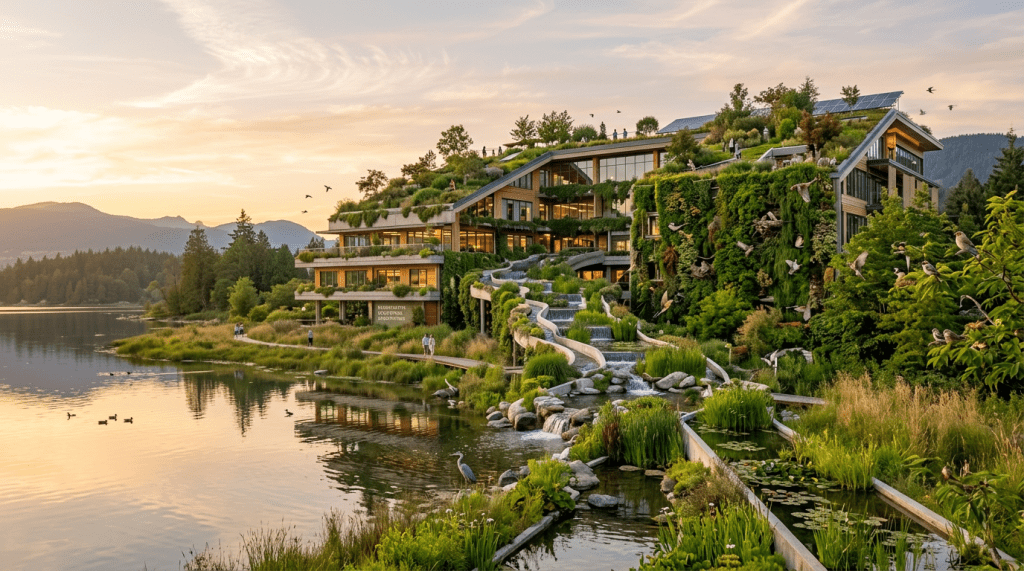
Lesson 1: Regeneration requires a fundamental mindset shift from separateness to interdependence
Joris de Leeuw made a compelling philosophical case that many of our current crises stem from the story of human separateness from nature. We have viewed ourselves as above or outside natural systems, leading to exploitation rather than participation. Cities, as concentrations of people and activity, are key places where this story must change. True regeneration begins with recognising that humans are part of a complex, evolving living system – what he describes as “consciousness evolving.”
This deeper perspective challenges conventional planning and design thinking and sets the foundation for everything else.
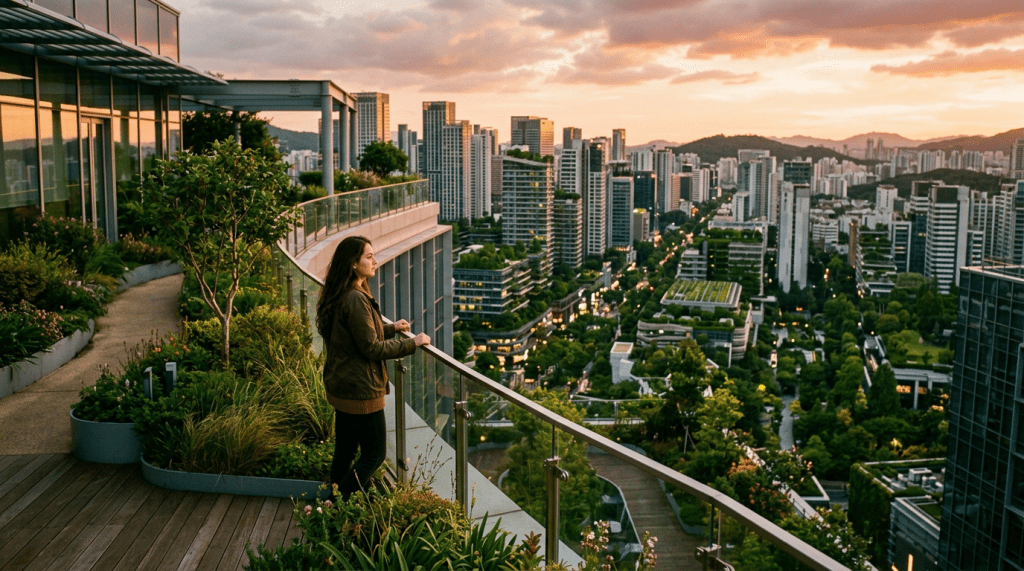
Lesson 2: Buildings and urban developments can function as active living ecosystems
The research debate on “Biodiver-Cities” explored how architecture can go beyond minimising impact to actively providing ecosystem services. Instead of just reducing energy use or emissions, buildings can capture rainwater, clean air, create habitat, and support biodiversity. The Tory Street example in Wellington demonstrated practical possibilities such as rainwater harvesting, solar integration, and indoor food production at the building scale.
This lesson highlights the technical potential for individual structures to become positive contributors to urban ecology.
Lesson 3: There is a productive tension between building-level technical solutions and larger urban-scale strategies
Both episodes revealed an important debate: Should we focus on making individual buildings highly technical regenerative systems, or should we prioritise master planning and biophilic design at the neighbourhood or city scale to drive behavioural and systemic change? The research showed strengths in building-level interventions for services like water and habitat, while broader planning was seen as essential for climate regulation, transport emissions, and cultural shifts.
This tension is not easily resolved and will likely require both approaches working together.
Lesson 4: Biophilic design and reconnection with nature are essential for both ecological and human wellbeing
The episodes emphasised that good regenerative design must address not only technical performance but also how people experience and connect with nature in cities. Elements such as visible natural processes (e.g., flowing water, living plants), refuge, and mystery help support psychological health while reinforcing ecological functions. Joris stressed that cities need to help people remember they are part of nature rather than separate from it.
Lesson 5: Practical regeneration requires experimentation, humility, and better coordination
A consistent theme was the need for humility and iterative learning. Joris highlighted the value of small experiments, learning from pioneering communities, and finding ways to bring governments and institutions along through compelling proof-of-concept projects. Neither purely top-down nor purely bottom-up approaches are sufficient on their own. Success will depend on bridging innovative ideas with existing systems while staying adaptable.
This week’s episodes (437R and 438I) made it clear that the future of cities depends on more than incremental improvements in efficiency. True regeneration calls for a deeper cultural and philosophical shift in how we see ourselves in relation to nature, combined with practical innovation at both building and urban scales. While the technical possibilities are exciting, the real challenge lies in implementation, coordination, and helping people reconnect with the living systems they are part of.
The path forward is not simple, but it is hopeful. Cities have the potential to become places where humans and nature actively support each other’s flourishing.
Next week we are discussing autonomous vehicles, their pros and cons, with John Rossant!
Share your thoughts – I’m at wtf4cities@gmail.com or @WTF4Cities on Twitter/X. Subscribe to the What is The Future for Cities? podcast for more insights, and let’s keep exploring what’s next for our cities.


Leave a Reply