This week on the What is The Future for Cities? podcast, we examined one of the defining features of rapid urbanisation in Africa: the governance of informal settlements. Through a research debate on a 2025 scoping review (Episode 435R) and a conversation with spatial practitioner Carina Tenewaa Kanbi (Episode 436I), we explored the practical challenges, limitations of current approaches, and what might be needed for better outcomes in fast-growing cities.
Lesson 1: Informal settlements represent a massive and persistent scale of urban reality
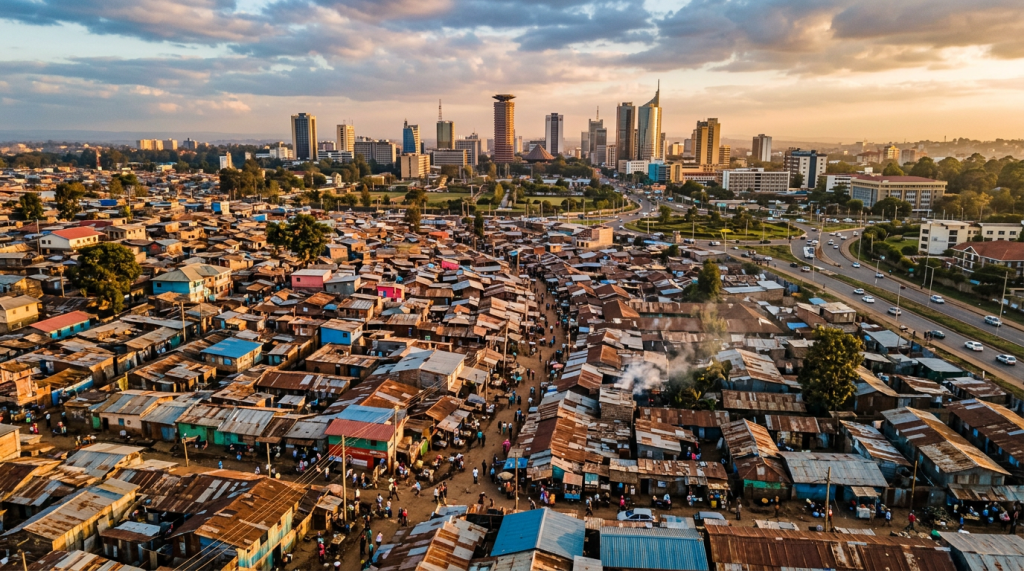
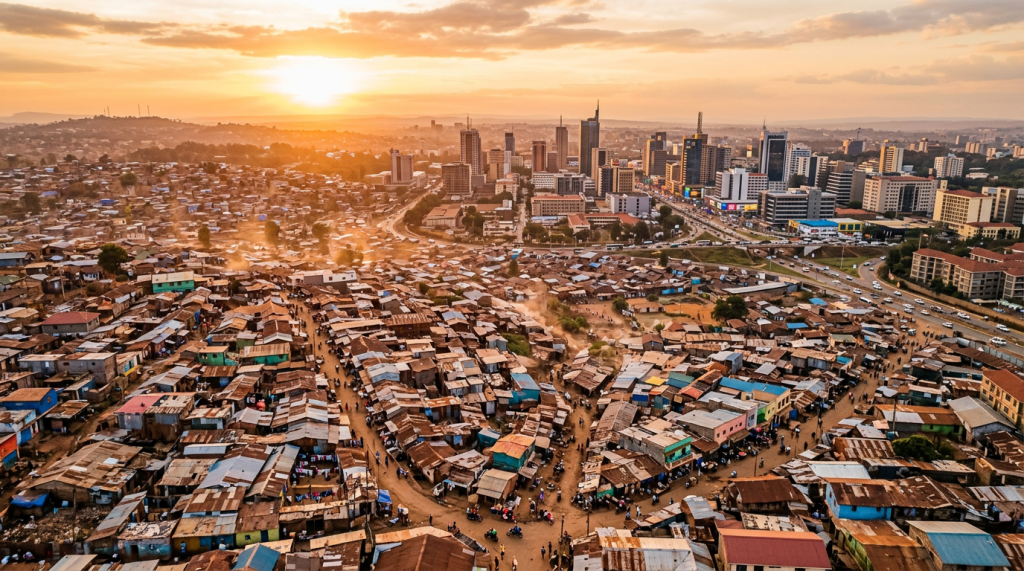
The research debate made clear just how significant informal settlements are across Africa. They house over half of the urban population in many countries – hundreds of millions of people – and function as fully operational parts of cities despite often lacking formal recognition, legal land tenure, and basic infrastructure. This is not a temporary phenomenon but a structural feature of how many African cities are growing. Any serious discussion about the future of these cities must start from this reality rather than wishing it away.
Lesson 2: Top-down government approaches frequently fall short in practice
Both episodes highlighted significant limitations with purely state-led, prescriptive governance models. The research showed that government interventions are often politically motivated (e.g., short-term upgrades timed with elections) and can leave communities worse off when support disappears. Kanbi noted that many local governments lack the capacity, resources, or consistent will to deliver sustained services and formalisation at the required scale. This creates a gap between policy intentions and on-the-ground outcomes.
Lesson 3: Bottom-up community innovation fills critical gaps but has clear limits
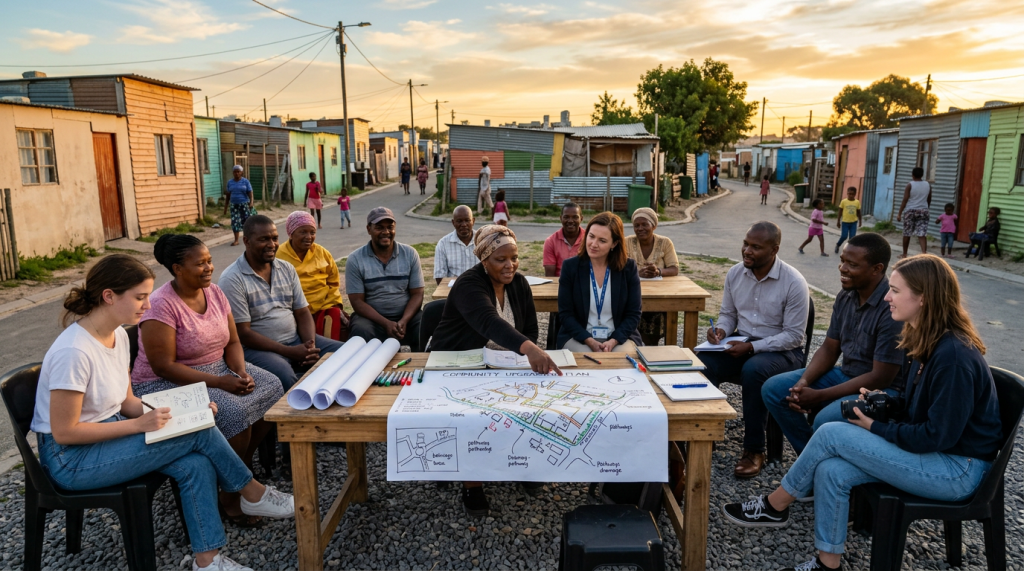
When formal governance is absent or ineffective, communities, civil society, and private actors step in with practical solutions – microfinance for incremental housing, self-organised waste management, and local negotiation with authorities. These approaches deliver immediate results and show remarkable adaptability. However, the research and interview both acknowledged that community-level efforts struggle with large-scale infrastructure (water systems, roads, sanitation grids) and long-term maintenance that require coordinated resources and legal authority.
Lesson 4: Cities are dynamic systems that evolve through movement and adaptation
Kanbi emphasised that cities are never static. People move constantly, bringing new ideas, needs, and ways of living. This mobility and adaptability shape how neighbourhoods function and change over time. Informal settlements often demonstrate high levels of practical innovation in response to immediate constraints. Understanding and working with this dynamism – rather than trying to impose rigid master plans – appears to be a more realistic path forward.
Lesson 5: Effective governance requires better coordination and realistic expectations
A recurring insight this week was the need for more effective coordination between government, communities, civil society, and private actors. Purely top-down or purely bottom-up models have clear weaknesses. The most promising direction seems to lie in hybrid approaches that respect the strengths of each while addressing their limitations – for example, using community-led proof-of-concept projects to demonstrate value and gradually bring formal institutions along. Planners and policymakers need to be more agile and willing to learn from what is already working on the ground.
This week’s episodes reinforced that informal settlements are not marginal problems but central to how many African cities actually function today. Addressing them effectively will require moving beyond ideological positions toward pragmatic, context-specific solutions that combine formal authority where it works with community innovation where it is already delivering results. The scale of the challenge is significant, but so is the ingenuity already present in these communities. The future of these cities will likely depend on how well we can align those two forces.
Next week we are discussing regeneration with Jorise de Leeuw!
Share your thoughts – I’m at wtf4cities@gmail.com or @WTF4Cities on Twitter/X. Subscribe to the What is The Future for Cities? podcast for more insights, and let’s keep exploring what’s next for our cities.


Leave a Reply