This week on the What is The Future for Cities? podcast the two episodes felt like they were speaking directly to the same big idea: how do we turn our streets back into places for people, not just cars? Episode 423R dove into the research debate on scaling Barcelona’s superblock model city-wide, while Episode 424I brought us an inspiring conversation with Ben Wolf, director of the documentary Changing Lanes. Together, they painted a hopeful, practical picture of what’s possible when we get serious about people-centred urban design.
Here are the five biggest takeaways that stood out to us — lessons that mix hard evidence with real-world passion and a clear call to think differently about the spaces we share every day.
Lesson 1: Superblocks aren’t just a neighbourhood fix — they can reshape entire cities when scaled thoughtfully
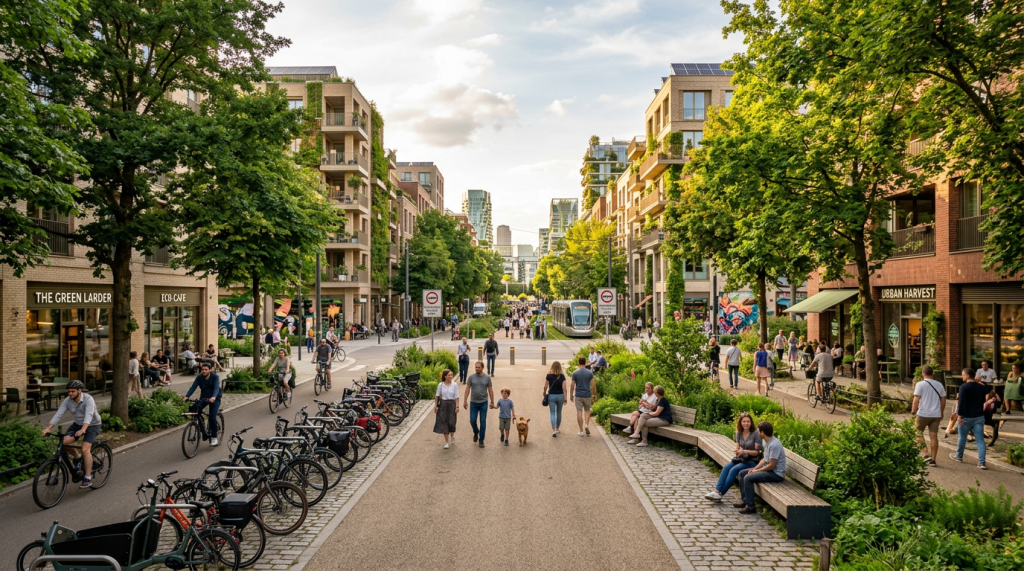
The research debate in 423R showed that Barcelona’s superblock model — grouping nine city blocks into one pedestrian-priority zone with cars restricted to the perimeter — delivers measurable wins: lower traffic, better air quality, more social interaction, and healthier residents. But the real question the episode tackled is scaling: can this work at city level without creating chaos or unfair side-effects? The evidence suggests yes, if planners get the details right — phased implementation, strong public transport alternatives, and genuine community input.
What was the most exciting was the vision of streets transformed from traffic corridors into green, lively hubs. It’s not about banning cars entirely; it’s about giving space back to people in a way that makes cities more liveable for everyone.
Lesson 2: Streets are our most valuable public spaces — and we’ve been using them wrong for a century
Ben Wolf put it perfectly in our interview: “My number one [opportunity] again would just be thinking about streets as public spaces.” He reminded us how Park Avenue in New York once had a 30-foot-wide park down the middle before cars shrank it to a useless six-foot strip. That story repeats in cities everywhere. We’ve handed over vast amounts of prime urban real estate to the storage of private vehicles.
The lesson? Streets are limited, precious public land. When we treat them as public spaces again — with benches, trees, play areas, and room to linger — they become the connective tissue that makes a city feel alive. This isn’t nostalgia; it’s smart, evidence-backed urbanism that improves safety, reduces emissions, and boosts local economies.
Lesson 3: Public space is the whole point of living in a city
Episode 424I dug deeper into why this matters. As Ben explained it, public space is the opposite of private space — it’s where anyone can go and where the magic of city life happens: face-to-face interactions, chance encounters, the rich social fabric that makes urban living worthwhile. Historically, that’s why people flocked to cities from ancient Rome onward. Yet mid-20th-century American cities largely emptied their public spaces, turning downtowns into 9-to-5 office zones.
The research and the interview converged here: when you reclaim streets for people, you don’t just reduce congestion — you rebuild community. Superblocks and people-centered street design create the conditions for that daily social richness we’ve been missing. It’s a reminder that great cities aren’t just efficient; they’re places where humans thrive together.
Lesson 4: Parking is the silent thief of public space — and we can do much better
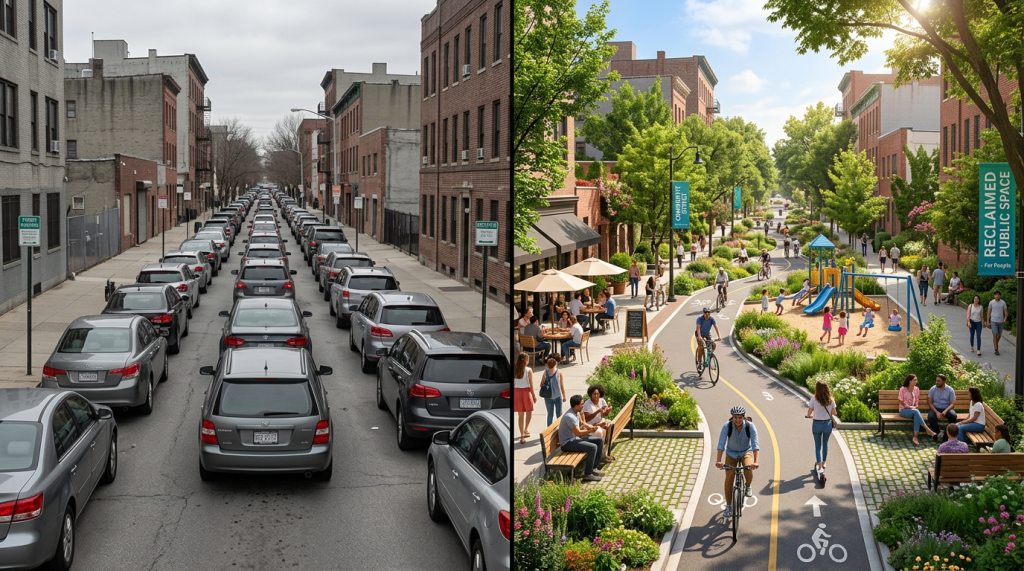
Both episodes hammered home a point that feels radical until you hear the numbers: we’ve surrendered enormous amounts of city land to parking private cars that sit unused 95 % of the time. Ben Wolf calls it “a very poor use of this really special limited resource.” The superblock research shows that when you remove through-traffic and rethink parking, you free up space for greenery, cycling, micromobility, and community activities without sacrificing accessibility.
Electric bikes, shared mobility, and better transit make this transition practical. The enthusiasm in the interview was infectious — this isn’t about sacrifice; it’s about unlocking better options that benefit everyone, including drivers who suddenly have less congestion and more pleasant routes.
Lesson 5: Real change needs engaged communities and courageous leadership
The most hopeful lesson came toward the end of the Ben Wolf interview. He reflected on the Changing Lanes story in New York: passionate activists fought hard, but real progress only happened when leaders were willing to stand firm despite initial resistance. “Big change requires leadership… You need an engaged community and leaders willing to take a stand.”
The superblock debate echoed this. Scaling city-wide demands both grassroots energy and political will to push through the “doomsaying” phase until the new normal feels obvious. History shows these changes — safer streets, more public space — quickly become loved once implemented. The combination of bottom-up activism and top-down vision is what turns good ideas into lasting transformation.
These five lessons aren’t abstract theory — they’re practical, proven paths toward cities that feel more human. From Barcelona’s data-driven superblocks to Ben Wolf’s passionate case for streets as living rooms, this week’s episodes showed us that the future of cities is already being built, one reclaimed block at a time. The enthusiasm is real because the benefits are real: cleaner air, stronger communities, safer travel, and daily joy in the places we share.
Small, thoughtful changes in how we design streets can create massive positive ripple effects.
The big question for all of us is: what’s one step we can support in our own cities — whether it’s backing a local superblock pilot, showing up for a community meeting, or simply sharing these ideas?
Next week we are discussing why energy is the foundation of everything with AJ Perkins!
Share your thoughts – I’m at wtf4cities@gmail.com or @WTF4Cities on Twitter/X. Subscribe to the What is The Future for Cities? podcast for more insights, and let’s keep exploring what’s next for our cities.


Leave a Reply