This week the What is The Future for Cities? podcast took us deep into the heart of African creative economies and the living, breathing role of arts and culture in shaping cities that actually feel alive. We didn’t just talk numbers or policy papers. We unpacked real mechanisms — how artists, intermediaries, and entrepreneurs are quietly repairing social fabric, advancing sustainable development goals, and reimagining what “future cities” can look like when culture is treated as infrastructure rather than decoration.
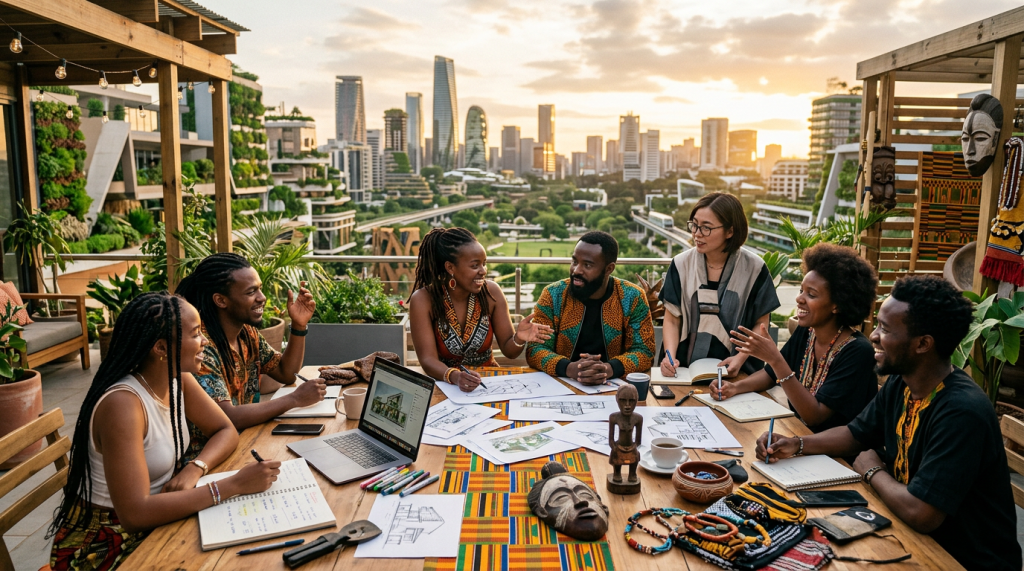
Tuesday’s research debate (Ep 415R) grounded everything in Jack D. Mensah’s 2025 empirical study on creative intermediaries in Accra’s contemporary art sector. The conversation challenged the tired Western lens that measures creative economies purely by GDP contribution or export value. Instead, it asked a sharper question: what if these informal networks are doing something far more profound?
The intermediaries Mensah interviewed aren’t running traditional galleries chasing quick sales. They function as “cultural enablers” and bridgers. They provide physical spaces, peer-to-peer education, and community dialogue that the state simply doesn’t. One example: the New Bouquet Foundation didn’t just host an exhibition — they linked Accra-based contemporary artists with traditional weavers in the Upper West region, brought in schools for the blind and deaf, taught weavers smartphone skills for direct market access, and created a self-sustaining micro-economy. Another project repurposed imported second-hand leather jackets (waste from the Global North) into protective uniforms for pineapple farmers, solving an agricultural safety issue through creative mediation. These aren’t side projects. They hit multiple SDGs at once — inclusion, skills, decent work, even environmental reuse — without waiting for formal funding.
The debate itself was honest with the benefits and the drawbacks. One voice argued these actors operate as holistic, regenerative assets that stabilise society like a keystone species in an ecosystem. The counter-view reminded us not to romanticise: many of these “regenerative” outcomes are actually brilliant survival tactics born from zero state support. They invent economic models on the fly — corporate partnerships, digital frames, contract training for artists — because they have to. The tension left us with a clear takeaway: African creative economies already deliver cross-sectoral impact, but calling them a complete “policy success” risks letting governments off the hook. We need to validate the grassroots ingenuity while still pushing for infrastructure that lets it scale without burning people out.
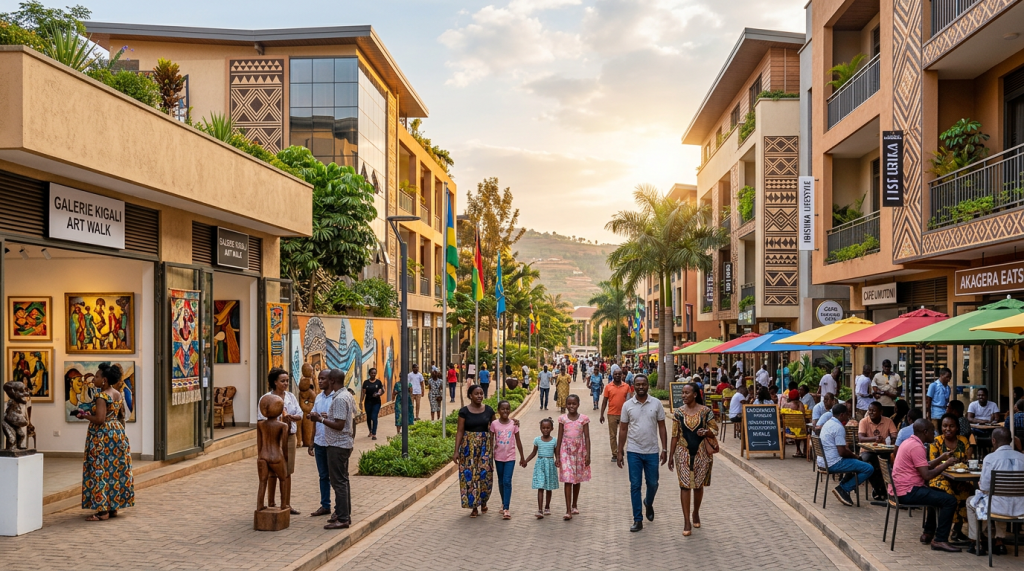
By Thursday, Raoul Rugamba’s interview (Ep 416I) brought those ideas to life through lived experience. As founder of Africa in Colors and a serial entrepreneur advising Rwanda’s Ministry of Youth and Culture, Raoul painted a vivid picture of cities where arts and culture actually reign — places where people are happy, local talent is celebrated, and global collaborators are welcomed.
Raoul’s definition of culture hit hard: it is what defines us as societies, families, and communities. In Africa it is visible in the colours of fashion, the gatherings, the genuine connections, the food that brings people together. Arts, he explained, is the creative expression born from that culture — but also shaped by TV, travel, immigration, and global influences. This isn’t theory. It’s daily reality in Kigali, where food culture itself is shifting: once alcohol-centric gatherings are evolving to centre shared meals and innovation in presentation.
The most powerful thread was how culture must evolve. Raoul was clear — we have no choice. Immigration is massive and accelerating. New influences create fresh art forms, new entertainment, more opportunities. Yet certain core elements need protection: museums, government policy, and community work to keep local memory alive so newcomers can learn and participate rather than overwrite.
This led naturally to practical recommendations. For city leaders and governments: invest in infrastructure, policy, and financing for arts; work directly with community artists to protect heritage while opening doors. For artists: keep creating from your roots, but restructure with tech so you can monetise and survive. For global talents: collaborate — don’t extract. Raoul pointed to how U.S. music, Hollywood, and fashion are already being inspired by African creativity; the opportunity is mutual exchange, not one-way influence.
Rwanda itself became a living case study. From a painful history redefined by colonisation and genocide, the country has returned to its proud, loyal roots while racing forward: gender-balanced parliament, top ease-of-doing-business ranking on the continent, Zipline drone delivery born as a proof-of-concept that went global. Raoul’s openness message was contagious — Rwanda is becoming a magnet for talent, business, and ideas precisely because it protects culture while building the structures that let it flourish.
The two episodes together revealed something bigger than either could alone. Episode 415R showed the incredible grassroots mechanisms already at work — intermediaries filling gaps with murals, education, waste-to-safety solutions, and cross-regional artisan connections. Episode 416I showed what happens when vision, policy, and collaboration meet that energy: culture stops being a survival hobby and becomes a structured, monetisable, inclusive driver of happier cities.
We learned that creative economies in Africa are not waiting for permission. They are already delivering regenerative impact — social cohesion, skills transfer, environmental solutions — through informal networks that Western metrics simply don’t capture. At the same time, they cannot thrive in a vacuum forever. The missing pieces Raoul named — infrastructure, financing, cross-sector collaboration, tech integration — are exactly what would turn today’s brilliant hustle into tomorrow’s resilient creative cities.
Perhaps the deepest lesson is humility. For too long, global conversations about “creative industries” have treated culture as an export commodity. This week reminded us that in African contexts, culture is first a relationship — between people, between past and future, between local and global. When we treat arts as holistic enablers rather than revenue streams, cities stop being “boring places to live” (Raoul’s words) and start becoming places where people gather, create, heal, and belong.
So here’s the practical reflection we’re carrying into next week: look at your own city.
Where are the invisible creative intermediaries already bridging gaps?
What small policy or collaboration move could protect what defines your culture while letting it evolve safely?
The African examples this week aren’t exotic case studies — they are blueprints for any city that wants to be genuinely sustainable, inclusive, and alive.
Next week we are investigating how adaptive urban furniture can make cities more resilient – with Zoe Wang!
Share your thoughts – I’m at wtf4cities@gmail.com or @WTF4Cities on Twitter/X.
Subscribe to the What is The Future for Cities? podcast for more insights, and let’s keep exploring what’s next for our cities.
 What is The Future for Cities? Podcast
Leave a comment