
This week on What is The Future for Cities? podcast we explored one of the most exciting – and contentious – topics in urban planning: connected and autonomous vehicles. Tuesday’s research debate (Episode 413R) dissected a 2023 comprehensive review by Md. Mokhlesur Rahman and Jean-Claude Thill, weighing efficiency gains against real-world risks. Thursday’s interview with environmental technologist and policy advisor Cormac McKay (Episode 414I) then shifted from analysis to action, showing how shared, multi-use autonomous vehicles could become the backbone of cleaner, more efficient, and climate-resilient cities. Together, the two episodes painted a nuanced picture: the technology itself is neutral. The outcome – utopian efficiency or dystopian sprawl – depends entirely on how we design, regulate, and integrate it.
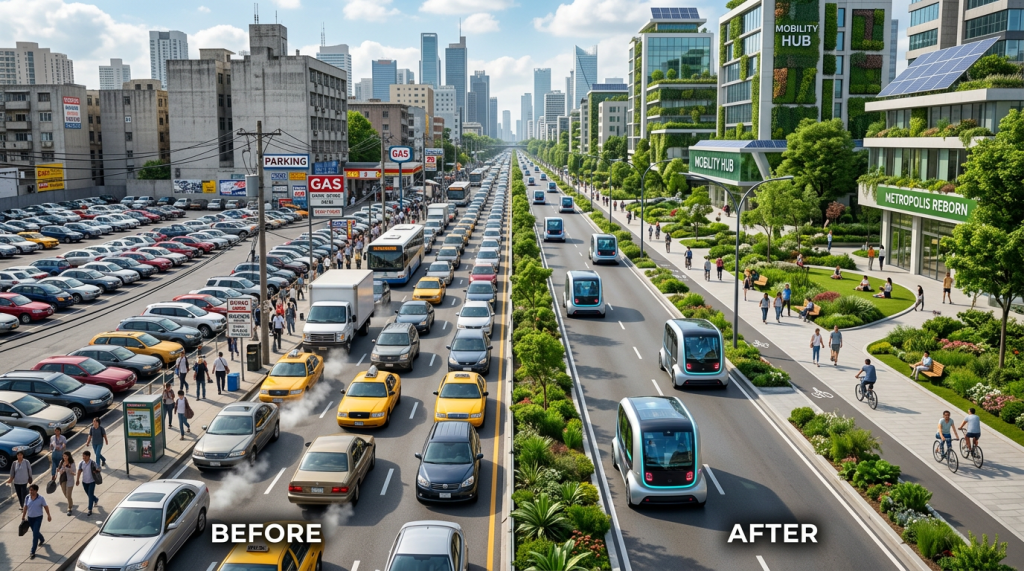
Lesson 1: One shared autonomous vehicle can replace up to 11.5 private cars – and reclaim huge amounts of urban space
The research makes the numbers undeniable. A single long-range, fast-charging shared autonomous vehicle (SAV) can serve 31–41 passengers per day. When paired with dynamic ride-sharing, the entire US vehicle fleet could theoretically shrink from 247 million to just 44 million vehicles by 2030. Parking demand could drop by up to 90 %, freeing up land currently used for asphalt (14 % of Los Angeles County, for example). That reclaimed space could become housing, parks, or active streets instead of storage for metal boxes. The debate showed this isn’t science fiction – it’s a mathematical optimisation of how cities move people.
Lesson 2: Behavioural change and “ghost miles” are the biggest risks – but they are not inevitable
The same research highlighted the flip side: when driving becomes effortless (work, nap, watch a movie), people travel more. Vehicle miles travelled could rise 5-25 %, and empty “ghost” vehicles circling for the next fare or avoiding parking fees could add 19-31 % more vacant miles. One speaker in the debate put it bluntly: “A parked car doesn’t cause congestion – a moving car does.” Yet the discussion also showed solutions exist. Dynamic ride-sharing and proper incentives can cut empty miles dramatically (one study showed a 4.4-mile reduction per shared trip). The lesson? Technology alone won’t save us; we must actively manage behaviour and demand.
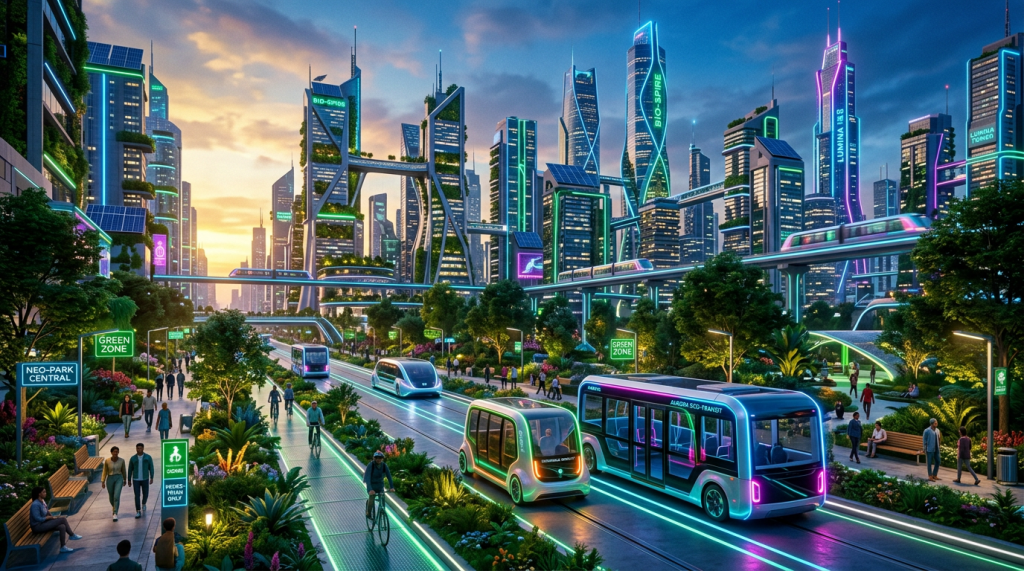
Lesson 3: Autonomous vehicles are not just cars – they can be modular, multi-use platforms
Cormac McKay opened our eyes to possibilities far beyond passenger transport. Imagine modular autonomous buses made of six connectable units: passengers walk to the back unit, it detaches, drops them off, and rejoins the convoy – slashing journey times without forcing the whole bus to stop. Even more exciting, robotaxis can double as cargo carriers, parcel hotels (charging at wireless pads on your street while accepting deliveries), and mobile batteries that store excess solar or wind energy and feed it back to the grid during peak demand. Traditional public transport has one use case; autonomous vehicles can have many – making them economically viable even in low-density “transport deserts.”
Lesson 4: Shared models and practical incentives could dramatically accelerate adoption
McKay was clear: if autonomous mobility remains a niche or high-cost option, its potential stays limited. Instead, he proposes practical tools like shared-mobility vouchers: give up your private car and receive a subscription for unlimited public transport plus first-and-last-mile robotaxi rides (shared or exclusive). In New York alone, just 25,000 households switching could fund a completely free bus network. Surveys he referenced show up to 60 % of people are willing to share rides if the journey is cheaper, faster, and more comfortable. The lesson? With the right policy and nudge-behaviour design, autonomous vehicles can become a mainstream, desirable part of daily urban life.
Lesson 5: The energy and social benefits go far beyond transport
Because these vehicles are electric by default and can act as rolling batteries, they help stabilise grids overloaded by renewables. They also tackle isolation and safety concerns – women in particular are already choosing Waymo robotaxis for the reassurance of no human driver. By serving areas traditional buses can’t reach and making transport desirable again, AVs can revitalise local economies, boost tourism, and improve mental health. The research debate warned of energy grid strain (one scenario required the equivalent of 33 nuclear plants), but Cormac showed that smart charging, vehicle-to-grid technology, and peak-hour sharing (only 15 % of the fleet is actually needed at rush hour) make the transition manageable and even beneficial.
The week left us with one overarching takeaway: autonomous vehicles are neither saviour nor villain. They are a powerful tool whose impact will be decided by policy makers, planners, and citizens demanding better. Get the shared, multi-use model right and we could see cleaner air, safer streets, less parking, stronger communities, and a more resilient energy system. Get it wrong and we risk more traffic, sprawl, and wasted potential.
The good news? The data, the technology, and the creative ideas already exist. As McKay reminded us, it’s no longer “pie in the sky” – we simply need to put what we already know into practice.
Would you switch to a shared autonomous subscription if it made urban travel faster and simpler?
Next week we are investigating how arts and business can create the better future for cities based on Africa’s example, with Raoul Rugamba!
Share your thoughts – I’m at wtf4cities@gmail.com or @WTF4Cities on Twitter/X.
Subscribe to the What is The Future for Cities? podcast for more insights, and let’s keep exploring what’s next for our cities.
 What is The Future for Cities? Podcast
Leave a comment