This week on the What is The Future for Cities? podcast we examined one of the most fundamental and debated questions in urban development: is economic growth still the most reliable path to better human wellbeing, or has it become a dangerous blindfold that hides inequality, rights deficits and environmental costs? Episode 409R debated Lant Pritchett’s 2024 paper arguing that rising GDP per capita is “empirically necessary and sufficient” for lifting people out of poverty and delivering basics like health and education. Episode 410I brought Casey Handmer into the conversation with a passionate case for continuous building, regeneration and growth as the antidote to urban stagnation. The pairing delivered a clear, data-driven yet hopeful message: growth is not optional, but it must be intentional, regenerative and city-led.
Lesson 1: Economic growth is empirically the strongest driver for reducing material poverty and improving basics
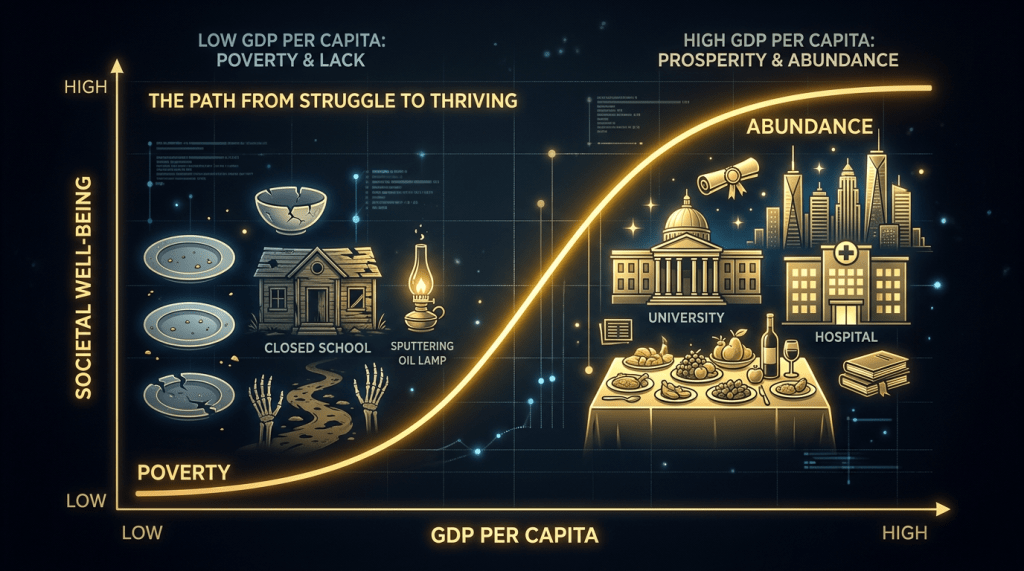
Pritchett’s analysis is relentless. When you plot median consumption against measures of poverty, health, education and sanitation across countries, the data hugs a tight curve with almost no exceptions. An R-squared of 0.988 means nearly all variation in poverty reduction is explained simply by the typical household getting richer. China’s 94-percentage-point drop in extreme poverty was 99% predicted by median income growth alone. The paper shows there are simply no poor countries that have solved material deprivation without first achieving substantial economic growth.
Lesson 2: Growth is necessary but not automatically sufficient – governance and state capability still matter
While the research proves growth is the dominant engine for delivering basics like health, education and sanitation, Casey and the debate highlighted clear limits. High GDP per capita does not guarantee effective outcomes on its own. Examples like Equatorial Guinea show that resource-driven wealth can produce high average income without translating into broad, reliable improvements in public services or infrastructure. The lesson is straightforward: growth provides the tax base, the revenue and the scale needed for large systems, but actually delivering functioning hospitals, schools, roads and utilities requires strong state capability and competent governance. Money buys the building materials, but it does not automatically buy well-run institutions or competent execution. Without deliberate investment in governance and administrative capacity, the benefits of growth can remain uneven or under-delivered, even when the overall economy expands.
Lesson 3: Successful cities are growing, regenerating and creating new opportunities
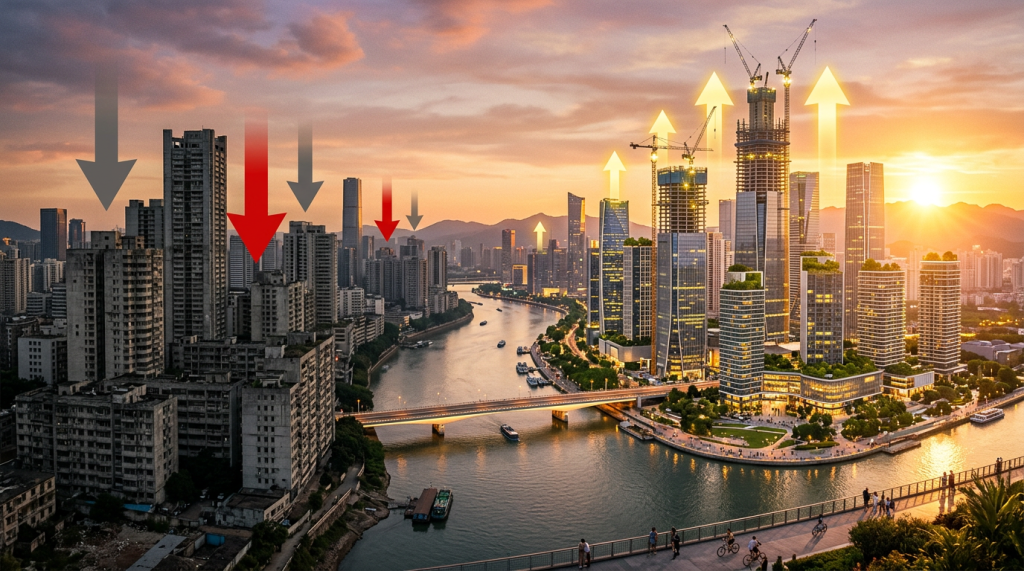
Casey’s core argument was uncompromising: a successful city is one that is growing and producing wealth and opportunity. Stagnation is death. Cities that stop building and renewing their fabric (like parts of Detroit or many European regional centres) lose dynamism, while places that aggressively recycle unsuccessful experiments and keep constructing stay vibrant. He praised Japan’s culture of continual rebuilding and warned that freezing urban fabric in place (as in much of the US) prevents the next generation from creating the cities they actually need.
Lesson 4: We must keep building – new cities, regeneration and even space as backup
Casey made the case that the steady-state option does not exist: cities are either growing or dying. He advocated liberalising construction norms, building entirely new cities from scratch (like fixing the Salton Sea disaster into a thriving new urban centre) and even viewing space settlements as a long-term redundancy plan for humanity. The future belongs to cities that treat their fabric as an ongoing conversation rather than a static museum.
Lesson 5: The antidote to stagnation and despair is bold local action and a growth mindset
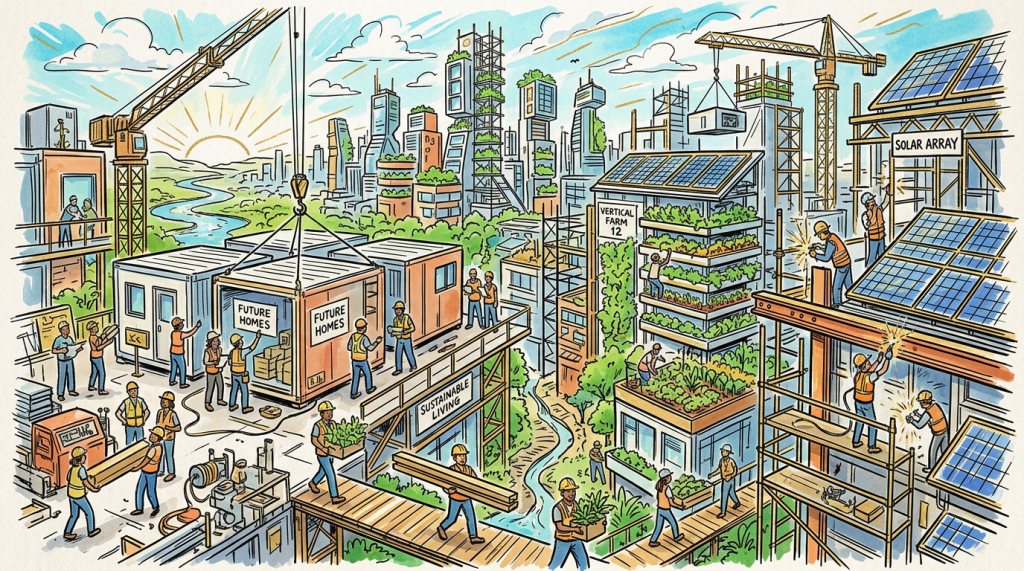
Both episodes converged on hope through action. Pritchett showed growth is the lever that actually moves the mountain of material poverty. Casey added that cities must give people permission to build, experiment and correct course aggressively. The mindset shift is crucial: stop seeing growth as the enemy and start seeing it as the foundation that enables everything else – from better infrastructure to new opportunities to the very possibility of regeneration.
This week replaced the usual growth-versus-wellbeing tension with a practical synthesis: economic growth is not a silver bullet, but it is the indispensable engine. Without it, no amount of redistribution or clever policy can deliver the basics of a decent life at scale. With it — when paired with intentional regeneration, good governance and a willingness to keep building — cities can create the conditions where human flourishing actually becomes possible.
Stagnation is not neutral; it is decline in disguise. The future belongs to the cities and leaders who choose to keep growing, renewing and building forward.
Is your city growing and creating opportunities, or feeling the drag of stagnation?
Next week we are investigating how green and grey infrastructure contribute to the future of cities with Louis de Jaeger!
Share your thoughts – I’m at wtf4cities@gmail.com or @WTF4Cities on Twitter/X.
Subscribe to the What is The Future for Cities? podcast for more insights, and let’s keep exploring what’s next for our cities.
 What is The Future for Cities? Podcast
Leave a comment