Have you ever stopped to think how much of modern city life rests on assumptions that are quietly crumbling?
This week on the What is The Future for Cities? podcast, we confronted that question head-on. Tuesday’s research episode (399R) unpacked a 2024 UN report on 30 years of adaptation under the UNFCCC and Paris Agreement, debating whether global efforts have built real resilience or mostly sophisticated paperwork. Thursday’s panel (400P) brought together Hudson Worsley, Matt Gijselman, and Allan Savory for a candid conversation on root causes, agriculture as civilisation’s foundation, and practical ways forward in urban management.
The discussions were unflinching. We heard stark warnings about finance gaps, bureaucratic traps, and the exponential pace of climate impacts outrunning linear planning processes. Yet woven through it all were threads of clarity, collaboration, and stubborn optimism. Here are five key lessons distilled from both episodes – honest about the challenges, but pointing toward what we can still shape.
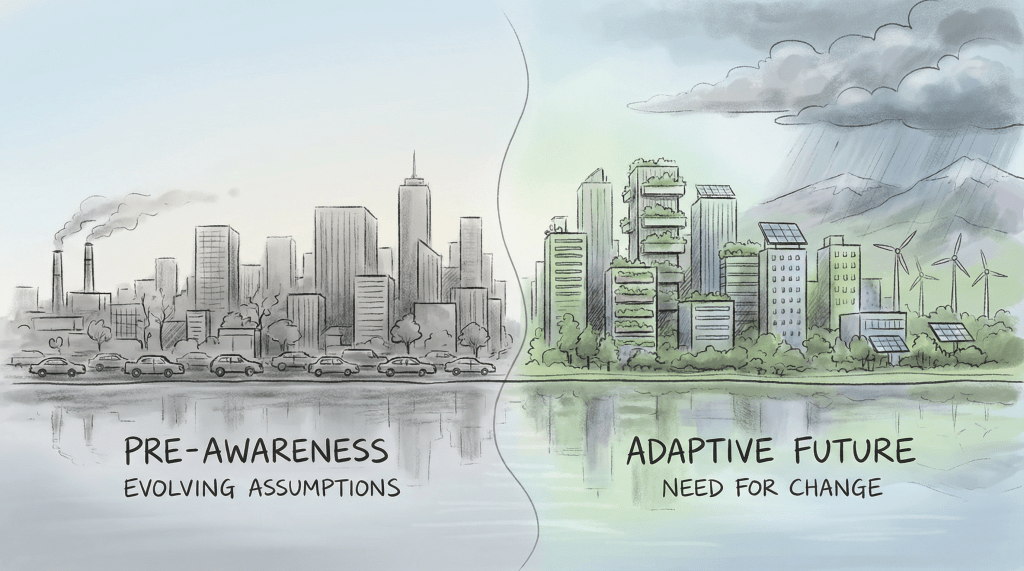
Lesson 1: Adaptation discourse has matured dramatically – from taboo to shared global responsibility
In 1994, talking about adapting to climate change was almost taboo – it felt like admitting defeat on mitigation. The debate traced how that shifted: a “scientific awakening” by the early 2000s, the Cancun Adaptation Framework in 2010, and finally legal parity with mitigation in the Paris Agreement’s Article 7. Today we have iterative cycles (assess, plan, implement, monitor/learn), national adaptation plans, and transparency tools that give the world a clearer picture than ever before.
This evolution matters. It created a common language and mechanisms for coordination across 190+ countries. Without it, responses would be fragmented and reactive. The lesson is that building shared frameworks, even slowly, is essential groundwork for any large-scale challenge.
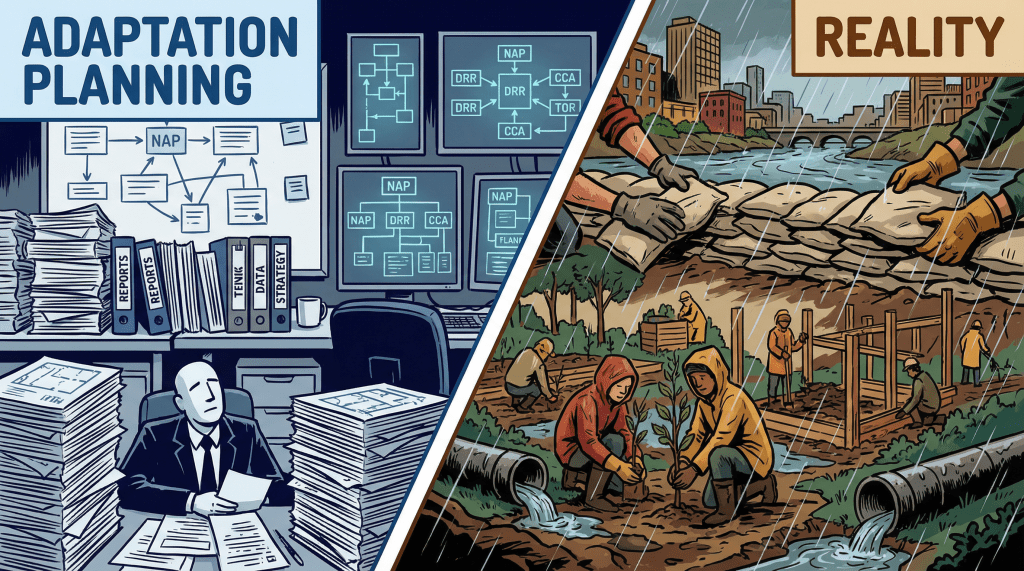
Lesson 2: Planning sophistication brings real benefits – but risks becoming a trap if disconnected from action
The debate praised the granularity of modern tools: national adaptation plans as deep domestic blueprints, adaptation communications as high-level signals to donors, biennial transparency reports as audits. Differentiating these prevents one-size-fits-all failures and helps target resources.
Yet the criticism was sharp: submission rates lag (only 58 developing countries have full plans), reporting burdens divert scarce resources from building, and the sheer volume (170,000 pages for the first global stocktake) can create an illusion of progress while implementation plateaus. Finance flows rose 28% recently, but the annual gap remains $194-366 billion. The lesson is clear – sophisticated planning is valuable, but only when it accelerates delivery, not substitutes for it.
Lesson 3: Cities rest on fragile foundations – broken assumptions and hidden vulnerabilities
The panel drove home how much urban life depends on unchallenged post-war ideas: stable climate, plentiful water, cheap energy, expendable biodiversity. Rainfall patterns are shifting, forcing preparation for drought and deluge simultaneously. Cities are specialised systems, highly dependent on external supplies – a shock to food or water could unravel order quickly.
Hudson Worsley captured the fragility vividly, reminding us that city stability can hinge on something as basic as short-term supply chains. The lesson is sobering: recognising these vulnerabilities is the first step to strengthening them.
Lesson 4: Progress is happening – the conversation today is more sophisticated than 20 years ago
Amid the warnings, the panel offered grounded hope. Matt Gijselman observed we’re no longer stuck in “climate wars” denial or polarisation. Communities, governments, and industry are having deeper discussions, driven partly by visible impacts like bushfires and floods. Technology plays a growing role in blue-green infrastructure integration, energy systems, and smarter urban design.
Solutions are known: mixed-use development, better mobility, integrated thinking between transport and housing. We’re seeing real shifts in public transport investment and policy focus. The lesson is encouraging – society is moving along a spectrum. It’s uneven and incomplete, but the direction is clearer than it was a generation ago.
Lesson 5: Addressing root causes offers the deepest hope – agriculture as the foundation we must protect
Every city in history has stood on one quiet pillar: agriculture – the production of food and fibre from land, water, and biodiversity. Allan Savory stressed that without healthy agricultural systems, there are no cities, only smaller communities. Overlooking this root cause leaves urban civilisation exposed.
Yet recognising it opens profound opportunity. Holistic approaches that regenerate soil, water cycles, and ecosystems can support both rural and urban life. The lesson is powerful: tackling foundational issues like land management creates ripple effects that strengthen cities indirectly but decisively.
This week laid bare hard truths in episodes 399R and 400P: 30 years of adaptation efforts have built impressive frameworks, yet finance and implementation gaps persist. Cities remain vulnerable because we built them on assumptions nature is undoing, and the pace of change can feel frustratingly slow against exponential threats.
Yet the conversations also lit a path forward. We have better tools, clearer data, and more sophisticated understanding than ever. Progress is uneven, but it’s happening – from evolving public discourse to known solutions ready for wider use. Most importantly, we heard repeated calls for collaboration, for starting somewhere, for stubborn optimism that refuses to give up.
Cities have always adapted – that’s how they’ve survived thousands of years. Today the challenge is larger and faster, but so is our knowledge and capacity to work together. The next decades won’t be easy, but they can be transformative if we choose action, listening, and shared purpose over paralysis.
Share one thing you’d like to see started in your community – a collaboration, a pilot, a conversation.
Small steps compound into the resilient urban futures we need.
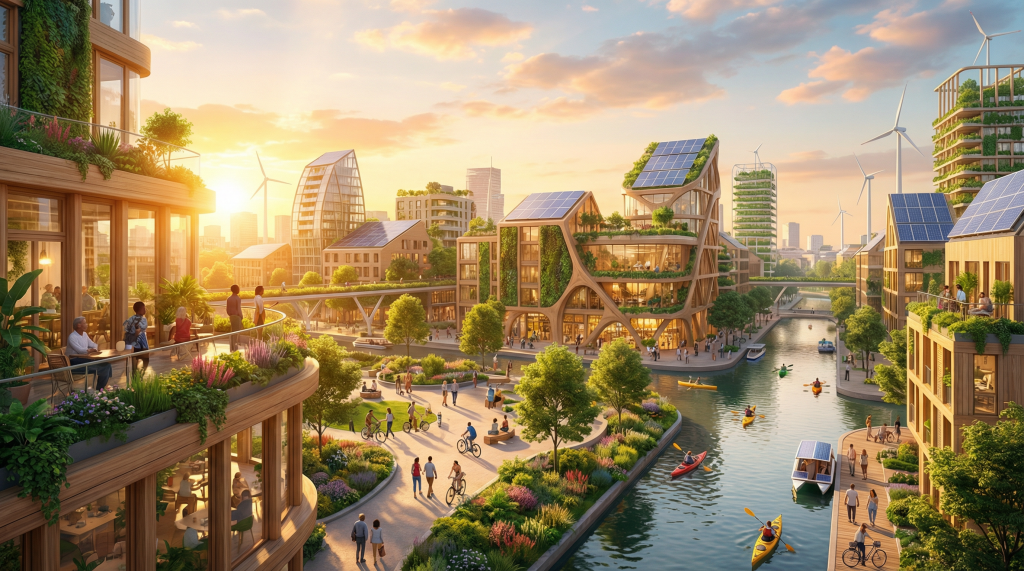
Next week we are investigating how climate resilience helps with property values, with Ben Gilliland!
Share your thoughts – I’m at wtf4cities@gmail.com or @WTF4Cities on Twitter/X.
Subscribe to the What is The Future for Cities? podcast for more insights, and let’s keep exploring what’s next for our cities.
 What is The Future for Cities? Podcast
Leave a comment