
Have you ever paused in the middle of a busy street, surrounded by the roar of engines and the haze of exhaust, and wondered what life might be like if cars weren’t the default?
This week on the What is The Future for Cities? podcast, we examined that very question. Tuesday brought us episode 395R, a research debate based on the 2016 paper “Car free cities: Pathway to healthy urban living” by Mark J. Nieuwenhuijsen and Haneen Khreis. The thought-provoking discussion investigated the health imperatives and potential pitfalls of shifting away from car-dominated urban environments. Then, on Thursday, episode 396I featured an interview with Lior Steinberg, urban planner and co-founder of Humankind, who shared practical visions for streets that prioritise people, active transport, and vibrant public spaces.
Through these episodes, we uncovered insights that challenge how we think about our cities. Rather than just dreaming of utopian futures, the conversations grounded us in evidence, real-world examples, and the messy realities of change. Here, I’ve distilled what we learned into five key lessons. These aren’t abstract ideas – they’re drawn directly from the debates and discussions, offering actionable food for thought for anyone interested in more liveable urban spaces.
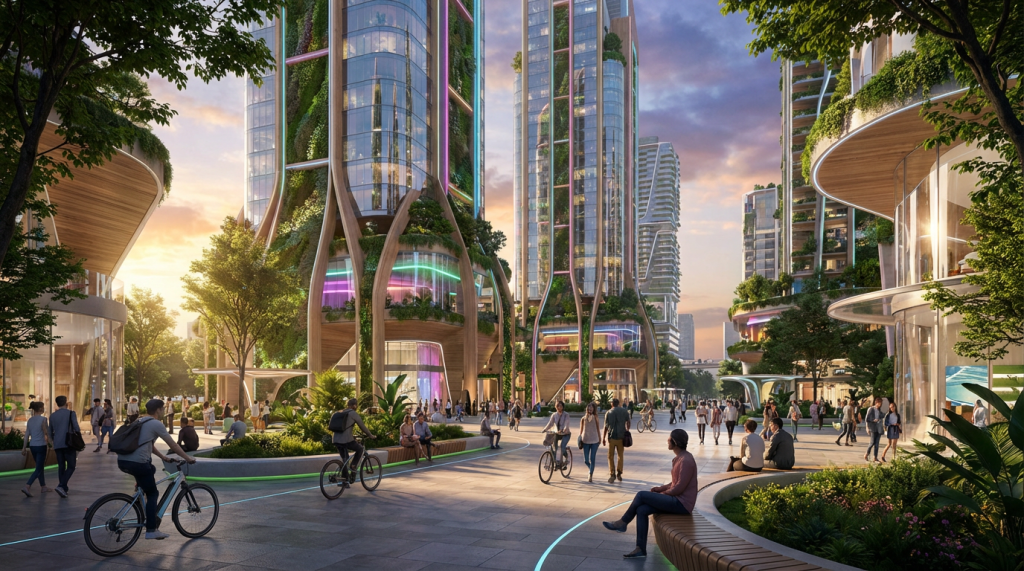
Lesson 1: Car dependence is a hidden health crisis, but shifting away could save lives and boost well-being
The research debate laid bare the staggering toll of our current systems. Private cars aren’t just convenient; they’re a source of widespread harm. Globally, motor vehicle crashes claim 1.3 million lives and injure 78 million people each year, but that’s only part of the story. The debate highlighted how cars promote physical inactivity, linked to 2.1 million annual deaths, alongside constant exposure to noise and air pollution. Temporary car-free days have shown drops in nitrogen dioxide levels by up to 40%, directly easing respiratory issues and reducing premature mortality.
Yet, the real opportunity lies in embedding movement into daily life. By replacing car trips with walking or cycling, we could tackle cardiovascular diseases, dementia, and type 2 diabetes on a population scale. Steinberg echoed this in his interview, emphasising that streets should be places for meeting, playing, and living – not just driving through. This lesson reminds us that healthier cities start with redesigning for human bodies in motion, turning commutes into chances for vitality.
Lesson 2: Physical activity gains from modal shifts outweigh many risks, but benefits aren’t evenly distributed
One of the strongest arguments from the research was the “hierarchy of benefits” in car-free policies. Health impact assessments show that even if only 20-40% of trips switch to active modes, the personal health dividends from exercise far eclipse minor risks like slight pollution exposure or accidents. This isn’t about banning cars outright but reallocating space – up to 70% of downtown land in some cities is tied up in parking and roads, space that could become parks or bike lanes proven to enhance mental health and longevity.
However, the debate cautioned that these gains are often concentrated among those who can switch modes easily, like able-bodied urban dwellers. For the broader population, air quality improvements might be modest if non-exhaust pollutants (from brakes and tyres) persist or if traffic diverts to outer areas. Steinberg’s perspective added nuance: urban planning involves contradictions, from traffic engineers clashing with playground advocates, and decisions are often driven by feelings rather than pure data. This lesson underscores the need for designs that ensure everyone benefits, not just a self-selecting active group.
Lesson 3: Reclaiming public space transforms social and economic vitality, countering isolation
A recurring theme was how cars fragment communities. Studies cited in the debate show that high-traffic streets lead to fewer social interactions and friendships, creating physical and psychological barriers. By contrast, car-free zones foster connections, turning roads into squares, playgrounds, or green havens. Steinberg vividly described streets as multi-functional: places to meet strangers, do business, or relax on a bench. He argued that we can’t achieve this without addressing the “elephant in the room” – the outsized space given to cars.
Economically, the shift makes sense too. The EU loses substantial amounts yearly to congestion, pollution, and accidents – conservative estimates place these external costs in the hundreds of billions of euros annually. Reclaiming space attracts talent and boosts retail through increased foot traffic, as seen in pedestrianised areas like Copenhagen. Evidence from various studies shows that people who walk tend to spend more, with sales often rising in pedestrian-friendly zones once changes settle in. This lesson highlights that car-free isn’t about loss; it’s about gain – more vibrant, connected neighbourhoods that enhance quality of life and even economic competitiveness.
Lesson 4: Political and logistical hurdles make rapid change difficult, requiring patience and smart coordination
The research debate and interview both highlighted the significant political and practical challenges that slow the move to car-free cities, even when the benefits are evident.
Powerful interests, including the motor industry, often resist restrictions on car use, delaying or weakening proposals in many cities. This pushback is rooted in long-standing car culture, where driving is seen as essential for freedom and everyday life. At the same time, cities have decades of infrastructure built around cars – roads, parking, and delivery systems that can’t simply be switched off overnight.
Successful transitions, such as Copenhagen’s rise as a cycling city, took decades of steady effort: starting with early bike paths, gaining momentum through oil crises and public pressure in the 1970s and 1980s, and continuing with consistent investment in safe cycling networks and public transport. Early concerns about impacts on businesses frequently proved unfounded, with many pedestrianised areas seeing higher foot traffic and increased spending as people stay longer in welcoming streets.
This lesson serves as a reminder that while the vision is compelling, lasting change needs gradual steps, broad support, pilot projects, and clear communication of benefits. Rushing risks setbacks, whereas patient, coordinated implementation builds momentum that lasts.
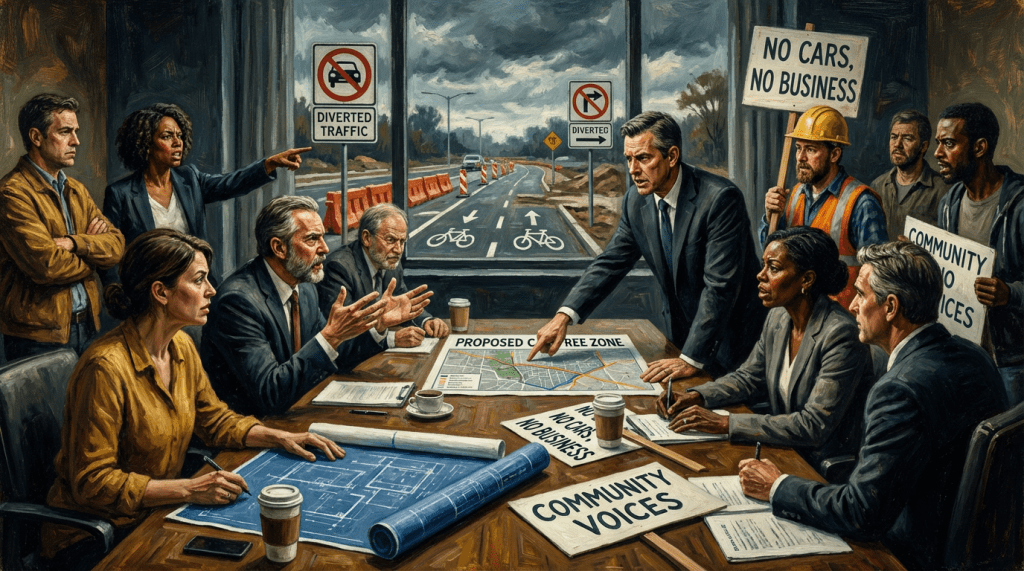
Lesson 5: True car-free success means making cars optional, not essential, through better alternatives
Steinberg’s interview crystallised the endgame: “getting rid of the car” isn’t elimination but redefining it as a last resort. Imagine walking five minutes to a supermarket or cycling ten to a doctor – that’s the goal. It requires rethinking urban layouts so daily needs are accessible via walking, biking, or transit. The research supported this, showing that coordinated policies (restrictions plus investments) build social capital and open up better choices for everyone.
This lesson ties everything together: healthier, more resilient cities emerge when we prioritise people over vehicles. It’s not about blame but about creating systems where daily life becomes easier, safer, and more enjoyable without relying on cars.
These episodes (395R and 396I) make one thing very clear: the evidence is mounting, the examples are inspiring, and the potential for healthier, more connected, more liveable cities is real. Car dependence is costing us dearly in health, space, and quality of life – but we have practical pathways forward that work when done thoughtfully and patiently.
The future of cities doesn’t have to look like the present. We can build places where people come first.
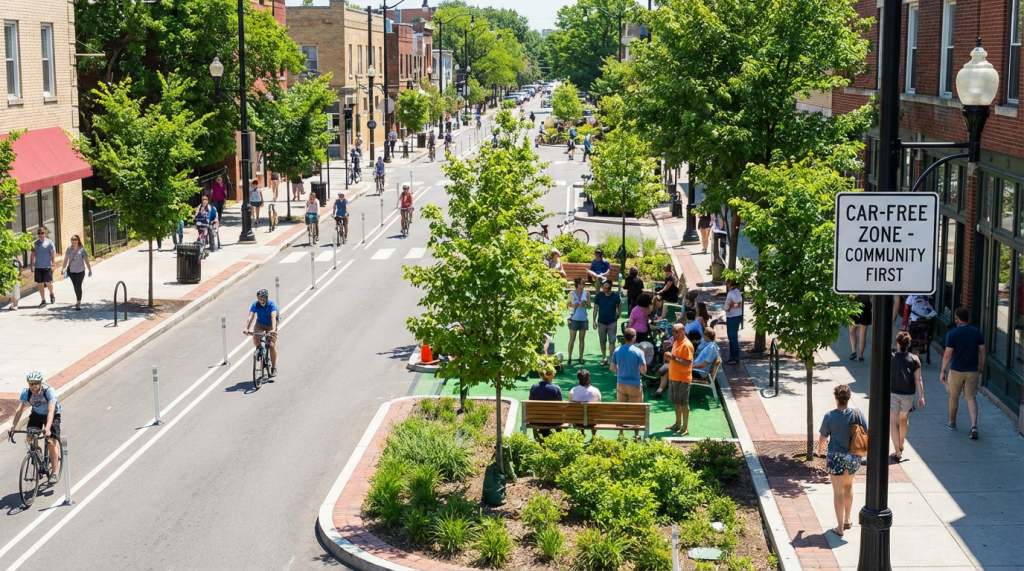
Next week we are investigating entrepreneurial capitalism with Bradford Cross!
Share your thoughts – I’m at wtf4cities@gmail.com or @WTF4Cities on Twitter/X.
Subscribe to the What is The Future for Cities? podcast for more insights, and let’s keep exploring what’s next for our cities.
 What is The Future for Cities? Podcast
Leave a comment