
What does the future hold for our cities when it comes to traffic safety and smarter transport? This week on the What is The Future for Cities? podcast, we had two episodes that offered fresh perspectives on these questions. Episode 363R presented a debate on the 2024 research paper by Mohamed Elassy, Mohammed Al-Hattab, Maen Takruri, and Sufian Badawi, titled “Intelligent transportation systems for sustainable smart cities“. It examined how technologies like vehicular networks and smart traffic lights can improve urban flows while raising concerns about security. Then, episode 364 featured an interview with Brett Ferrin, VP of Sales for North America at Traffic Logix, who shared his views on cities, transportation, road safety, AI, decision making, and preparing the next generation.
From these discussions, several important ideas stood out. They highlight how data, technology, and human factors intersect to shape urban environments. Below, I outline five key lessons drawn from the episodes, blending insights from the research debate and Brett’s practical experience. These lessons can help us think more clearly about building cities that work better for everyone.

Lesson 1: Data-driven decisions lead to better urban outcomes
One clear message from both episodes is the value of using solid data to guide choices in city planning and traffic management. In the research debate, the focus was on intelligent transportation systems (ITS) that gather and process information to make roads more efficient. For example, these systems can cut travel times by up to 25% by predicting flows and adjusting signals in real time. In Los Angeles, implementing smart traffic lights led to a 16% drop in travel times and 12% fewer stops at lights, showing how data can ease congestion without major infrastructure changes.
Brett Ferrin reinforced this in his interview, describing his company as a “data company” that provides “ground truth” on traffic patterns. He explained how collecting details on speeds, volumes, and behaviours allows cities to make informed moves, like installing speed humps or radar signs where needed. He contrasted this with emotional reactions, such as calls for changes after a tragic accident, and advocated for proactive steps based on evidence. This approach aligns with global goals like Vision Zero, which aims for zero road fatalities. Brett noted that with tools like AI to analyse data quickly, cities can shift from reacting to problems to preventing them. Without data, decisions risk being shortsighted, leading to more cars on roads or inefficient layouts. This lesson reminds us that good information is the foundation for creating spaces where people can move safely and smoothly.
Lesson 2: AI excels at analysis but requires careful handling
The episodes also explored AI’s role in urban contexts, with a shared emphasis on its strengths in processing information rather than inventing new things. In episode 364, Brett highlighted how AI helps handle massive datasets that would overwhelm human teams. He gave the example of sifting through traffic data to spot trends instantly, enabling faster responses to issues like speeding in neighbourhoods. However, he cautioned that AI is “artificial intelligence” – built on algorithms we feed it – and society must understand its dual potential for good and harm. He mentioned seeing disclaimers on news articles about AI analysis, underscoring the need for human oversight.
The research debate in episode 363R echoed this by discussing AI in predictive tools for mobility and system reliability. Methods like neuro-fuzzy approaches help forecast failures or optimise routes, but the conversation stressed vulnerabilities in complex software. With millions of lines of code in ITS, risks like buffer overflows could disrupt entire networks if not addressed. Both episodes suggest AI isn’t a magic fix; it’s a tool that demands responsibility. For cities, this means using AI to enhance decisions while building in safeguards, ensuring it supports human goals without unintended consequences.
Lesson 3: Innovation must balance with security and control
A recurring theme was the need to weigh technological advances against potential risks, particularly in security and regulation. The research episode delved into ITS components like VANETs (vehicular ad-hoc networks) and V2X (vehicle-to-everything) communication, which enable real-time sharing for safer driving. Features like 5G-powered warnings for pedestrians or emergency calls in crashes show promise, but the debate pointed out flaws. Decentralised networks are prone to attacks, such as Sybil attacks where one entity fakes multiple vehicles to spread false data, causing chaos or accidents. Privacy issues arise too, as tracking movements for efficiency can expose personal details.
Brett added a practical angle, expressing concerns about new tech like electric vehicles and e-bikes. He noted their quiet operation poses dangers to those with hearing or sight impairments, and young users might push speeds without thinking of safety. He advocated for controls, like speed limits enforced by devices in cars, to prevent misuse. Drawing from his 22 years in traffic calming, he said people drive where they’re comfortable, so environments must encourage safe behaviours through design – narrower roads or chicanes. This lesson underscores that progress isn’t just about adopting tech; it’s about integrating it thoughtfully to avoid setbacks. Standards like IEEE 1609 for secure communication are steps forward, but ongoing vigilance is key.
Lesson 4: Road safety is everyone’s shared duty
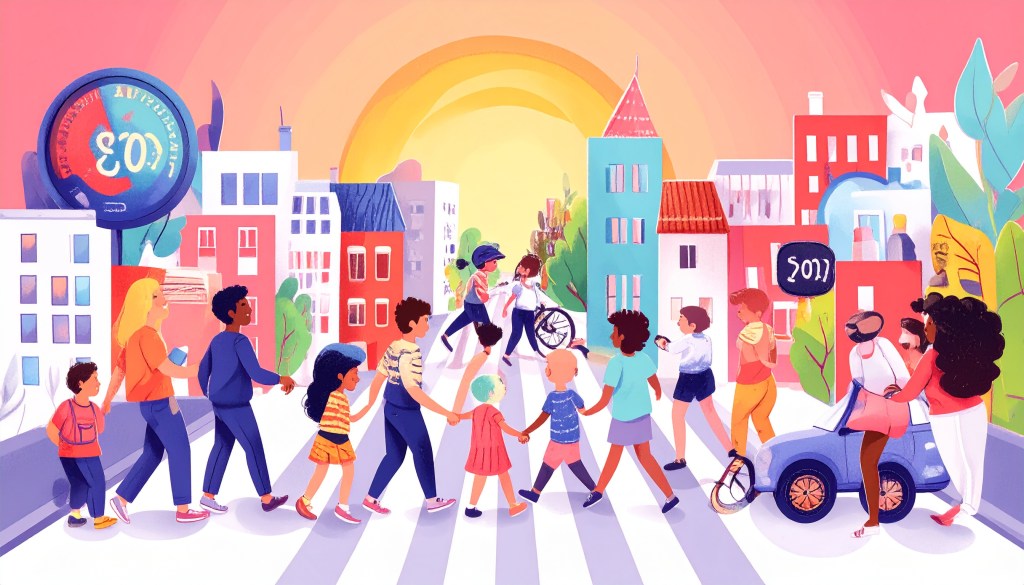
Perhaps the most human-centred lesson was the idea that safety on roads isn’t just for experts or governments – it’s a collective effort. Brett stressed this strongly, saying we all have an “obligation” to be aware of our surroundings and impacts on others. Whether driving, walking, or using a scooter, actions affect families, neighbours, and communities. He shared his company’s slogan, “Safeguarding your ordinary”, meaning protection in everyday moments like crossing streets or commuting. He tied this to personal stories, like serving on a city council and discussing density to keep rural areas safe for animals and people.
The research supported this with examples of ITS aiding vulnerable users, such as vehicle-to-pedestrian alerts that give seconds of warning to avoid collisions. Yet, the debate warned that over-reliance on tech could falter if systems fail, emphasising human responsibility in design and use. Both episodes painted safety as a mindset: from engineers building reliable networks to individuals choosing mindful behaviours. This shared approach could help achieve zero deaths, but it requires education and empathy alongside technology.
Lesson 5: Change is challenging but essential, especially for the young
Finally, the discussions touched on embracing change while learning from history to prepare future generations. Brett, a self-described “farm boy” who prefers rural life, admitted technology evolves quickly and can be worrying – like autonomous vehicles or silent EVs. He recounted riding in a driverless taxi but declining at first due to discomfort, yet noted improvements over time. He shared a touching story about his elderly neighbour, “grandpa”, who taught him about life in the 1800s with horse-drawn carts, contrasting it with modern phones and TVs. Brett believes we must share these stories to show how far we’ve come, calming fears for youth who will adapt to new tools.
The research episode reflected this in its look at rapid tech adoption, from 5G to predictive algorithms, but stressed building resilient systems to support ongoing change. Examples like Copenhagen’s tech goals or Dubai’s autonomous travel targets show cities pushing boundaries, yet the debate highlighted that without addressing fears – like NIMBY attitudes to new developments – progress stalls. Brett sees the future in young people unafraid of adaptation, urging us to teach them positively. This lesson encourages viewing change not as messy but as an opportunity, ensuring cities evolve inclusively.
These five lessons from the podcast episodes offer a roadmap for thinking about urban challenges. Data and AI provide tools, but balance, responsibility, and openness to change make them effective. If you haven’t listened yet, check out episodes 363R and 364 – they provide even more depth on these topics.
As cities grow, incorporating these ideas could lead to safer, more efficient spaces.
Next week we are investigating place branding and civic branding with Ryan Short!
Share your thoughts – I’m at wtf4cities@gmail.com or @WTF4Cities on Twitter/X.
Subscribe to the What is The Future for Cities? podcast for more insights, and let’s keep exploring what’s next for our cities.
 What is The Future for Cities? Podcast
Leave a comment