In the dynamic field of urban planning and development, resilience stands out as a fundamental principle for cities around the world. This week’s episodes of the What is The Future for Cities? podcast examine this concept closely, providing new views on how cities can endure disruptions and adjust to unpredictable conditions. Episode 361R offers a research-oriented debate of a 2024 study on the 100 Resilient Cities (100RC) initiative, assessing its connection to sustainable development goals (SDGs). In contrast, episode 362I presents a detailed conversation with Sam Kernaghan, Director for the Resilience Program at the Committee for Sydney, who draws from his broad background in urban resilience to offer actionable ideas. These episodes together emphasize resilience as more than a protective measure—it serves as an active approach to prospering through change. In this blog post, we highlight five key lessons from both episodes, concentrating on resilience and linking academic concepts with practical uses.

Lesson 1: Resilience Means Bouncing Forward, Not Just Bouncing Back
A primary lesson from the episodes is the shift in understanding resilience from simply recovering to advancing beyond the original state. The research in Episode 361R, based on the article by Elisa Kochskämper and colleagues, shows that effective resilience strategies in the 100RC program aim for transformative adaptation rather than minor adjustments. The Transformative Adaptation Index (TAI) used in the study measures how strategies address underlying vulnerabilities, such as through systemic reforms instead of surface-level fixes like strengthening infrastructure. Cities with higher TAI scores, often from the Global South, incorporate a broader range of sustainability targets, recognizing both sudden disruptions like disasters and ongoing pressures like infrastructure strain.
Sam Kernaghan in Episode 362I builds on this by introducing “bouncing forward” as a core idea from socio-ecological perspectives. He explains that after events like floods or heatwaves, returning to the prior condition is impractical—people gain new experiences, behaviours evolve, and systems require upgrades informed by what happened. This creates chances for enhancement, such as better readiness or redesigned infrastructure. Kernaghan draws from his work with the 100RC program and the Rockefeller Foundation to stress preparing complex urban systems for uncertainty. Both episodes illustrate that resilience involves evolving cities to become stronger, with the research noting low average TAI scores as a sign that many plans still lean toward maintaining existing setups rather than innovating.
Lesson 2: Data Drives Effective Urban Decision-Making and Governance
The episodes stress the critical function of data in fostering resilient cities, but they caution against collecting information without purpose. In Episode 361R, the study highlights how cities with strong policy alignment and public involvement achieve higher transformative outcomes. Global South cities, with better participation scores, use data to grasp local risks more fully, leading to plans that blend resilience with environmental and social goals. However, the analysis points out a common shortfall: strategies often favor economic focuses, with less emphasis on biosphere elements like water efficiency or biodiversity.
Kernaghan in Episode 362I echoes this by critiquing the smart cities movement, where sensor networks gather vast data but rarely lead to meaningful changes in urban design. He advocates for “smart governance,” where data informs decisions that empower people, such as real-time updates on traffic or air quality. From Sydney examples, he describes microclimate monitoring by Western Sydney University, deploying hundreds of sensors to map heat variations and identify hotspots. This informs actions like creating green corridors or using precision irrigation to cool areas, demonstrating how data can transition from research to practical resilience-building. Together, the episodes teach that resilience requires turning data into agency for individuals and planners, bridging the gap between collection and application.
Lesson 3: Cities Serve as Ideal Testing Grounds for Innovation
A key insight is the potential of urban environments as “sandboxes” for experimenting with solutions to build resilience. Episode 361R’s research shows that the 100RC framework encourages systemic thinking, where cities test approaches in varied contexts to address shocks and stresses. High-TAI strategies often involve inclusive processes that draw on diverse community inputs, enabling innovative responses to chronic issues like housing crises.
Kernaghan expands this in Episode 362I, noting that cities’ density, diversity, and resources make them perfect for piloting ideas. With multiple communities and environments, urban areas can try out energy innovations or adaptive planning, then scale successful ones. He cites Sydney’s universities and businesses as sources of world-leading research, such as building designs that minimize heat or health-focused technologies from the Australian Open. Kernaghan urges moving beyond talk to action, using cities’ capital and expertise to test and prove concepts. This lesson underscores resilience as an innovative process, where experimentation turns challenges into opportunities for growth.
Lesson 4: Renewable Energy Enhances Urban Self-Sufficiency and Resilience
The episodes reveal how shifting to renewables strengthens city resilience by reducing reliance on vulnerable external systems. In Episode 361R, the study links high transformative scores to better SDG integration, including energy goals. Cities addressing a wide array of targets, particularly in the Global South, show resilience through sustainable practices that mitigate risks like energy disruptions.
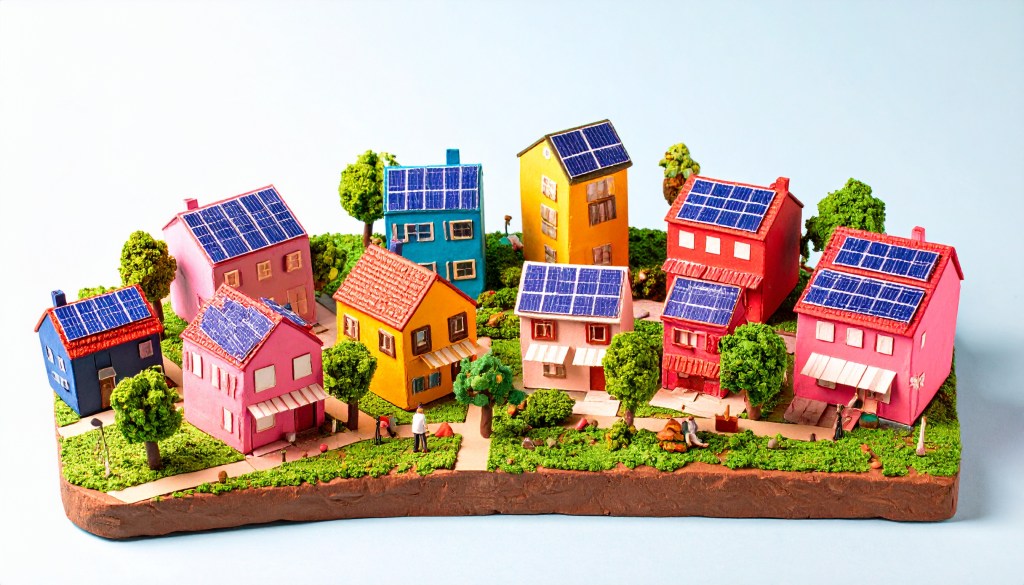
Kernaghan provides concrete examples in Episode 362I, such as a study indicating that full rooftop solar coverage in Sydney could supply 75% of the city’s energy needs, with batteries handling storage. This uses existing buildings, avoiding new infrastructure while promoting self-sufficiency. He connects this to the energy transition amid climate change, where renewables offer opportunities alongside hazard risks. By generating power locally, cities lessen dependencies that amplify disruptions, like grid failures during storms. This lesson positions renewable energy as a resilience tool, turning urban rooftops into assets for stability and sustainability.
Lesson 5: Applied Knowledge and Social Networks Are Foundations of Resilience
Finally, the episodes emphasize that resilience relies on applying diverse knowledge and building strong networks. Episode 361R highlights information as a pillar of advancement, where shocks provide new insights for improved policies. The research shows that inclusive governance, with community involvement, leads to more resilient strategies by incorporating varied perspectives on vulnerabilities.
In Episode 362I, Kernaghan broadens technology to mean “applied knowledge,” including non-digital solutions like indigenous fire management in Australia—cool burns that regenerate landscapes while respecting ecosystems. He stresses social networks, such as neighbors aiding each other during floods, as seen in Australia’s Northern Rivers. Research supports that communities with strong connections recover better, with examples like New York apartment blocks where mutual support reduced heatwave impacts. Kernaghan’s experience across cities like Bangkok and London shows that vibrancy—dense interactions offering cultural and economic opportunities—depends on these networks. This lesson teaches that resilience emerges from blending traditional and modern knowledge with human connections, ensuring cities adapt collectively.
This week’s What is The Future for Cities? episodes present resilience as a proactive, evolving strategy for urban success. From bouncing forward and data-driven governance to innovation sandboxes, renewable self-sufficiency, and knowledge networks, these five lessons connect the 100RC research with Kernaghan’s expertise. As urbanization and climate pressures grow, these ideas guide cities toward adaptability.
Whether in planning or policy, we need to embrace change to create robust urban futures.

Next week we are investigating urban traffic safety and its effect on the future of cities, through an interview with Brett Ferrin!
Share your thoughts – I’m at wtf4cities@gmail.com or @WTF4Cities on Twitter/X.
Subscribe to the What is The Future for Cities? podcast for more insights, and let’s keep exploring what’s next for our cities.
 What is The Future for Cities? Podcast
Leave a comment