This week on the What is the future for cities? podcast, we explored urban planning through the lens of emerging trends and foresight strategies. Tuesday’s research episode (351R) summarised the 2025 Trend Report for Planners by Petra Hurtado, Ievgeniia Dulko, Senna Catenacci, Joseph DeAngelis, Sagar Shah, and Jason Jordan, published by the American Planning Association with the Lincoln Institute of Land Policy. It organised urban signals into three timescales: Act Now, Prepare For, and Learn About and Watch, offering planners tools to navigate rapid change. This set the stage for Thursday’s interview (352I) with Petra Hurtado, Chief Foresight and Knowledge Officer at the American Planning Association, who discussed foresight methods, multi-generational workplaces, and dynamic planning for resilient urban futures.
These episodes resonate with 2025’s urban challenges, from AI-driven planning to demographic shifts and climate pressures. The report highlighted immediate trends like housing mismatches and digital fatigue, while Hurtado’s insights emphasised scenario planning to prepare for multiple futures. Together, they underscore the need for cities to adapt proactively using data and collaboration.
From these episodes, five key lessons emerge on leveraging trends and foresight for robust urban planning and economic vitality.

Lesson 1: Demographic shifts demand flexible housing and zoning solutions
The research episode highlighted the Act Now trend of changing household structures, with nuclear families now under one-fifth of U.S. households, while single-person and childless couple households exceed half. Multi-generational living is rising, yet zoning often lags, rooted in outdated family models, exacerbating affordability crises – 2023 was the least affordable home-buying year in a decade. Planners are urged to act swiftly, promoting accessory dwelling units (ADUs), co-living, or micro-apartments to match diverse needs.
Hurtado reinforced this in her interview, noting cities’ unique appeal lies in walkable amenities, but rigid policies hinder adaptation. She advocated dynamic land use to support evolving demographics, like Gen Z staying with parents or ageing Boomers unable to downsize. This lesson underscores economic impacts: flexible zoning boosts local businesses and services by aligning housing with population realities, fostering vibrant, adaptable urban economies without massive new builds.
Lesson 2: Digital fatigue and AI integration require balanced urban tech strategies
The report flagged Act Now digital fatigue, with 72% of Americans wary of fake online info and 39% globally avoiding news due to distress, per a 2024 Reuters study. Gen Z faces heightened anxiety, prompting laws like Australia’s under-16 social media ban. Planners must balance tech reliance with human-centric spaces, like no-phone community events, to maintain engagement.
Hurtado’s interview built on this, discussing AI’s role in planning tools, like traffic or resource optimisation, but warned of over-dependence. She advocated foresight to integrate tech thoughtfully, ensuring cities remain liveable. Her focus on scenario planning aligns with preparing for AI’s data-driven potential while addressing trust issues. This lesson highlights economic stakes: balanced tech strategies drive productivity through smart systems, but overuse risks alienating residents, reducing urban vitality. Cities must prioritise accessible, transparent tech to sustain economic and social connectivity.
Lesson 3: Multi-generational workplaces reshape urban workforce planning
The Prepare For trend noted six generations – Silent to Gen Alpha – in 2025 workplaces, a first, creating challenges in aligning diverse skills and expectations. With only 40% of workers tying identity to jobs (Pew, 2023) and 27% of roles automatable, cities must plan for leisure-focused economies, supporting spaces for learning and connection.
Hurtado’s interview expanded this, stressing foresight to integrate generational dynamics into planning. She highlighted scenario exercises uniting teams, preparing cities for workforce shifts, like Gen Alpha internships alongside Boomer leaders. This lesson points to economic opportunities: cities fostering multi-generational collaboration can attract firms by offering vibrant, adaptable labour markets. Planning for mixed-use spaces that blend work and leisure supports productivity and innovation, ensuring cities remain competitive hubs in a changing economic landscape.
Lesson 4: Fungi and sustainable innovations offer new urban possibilities
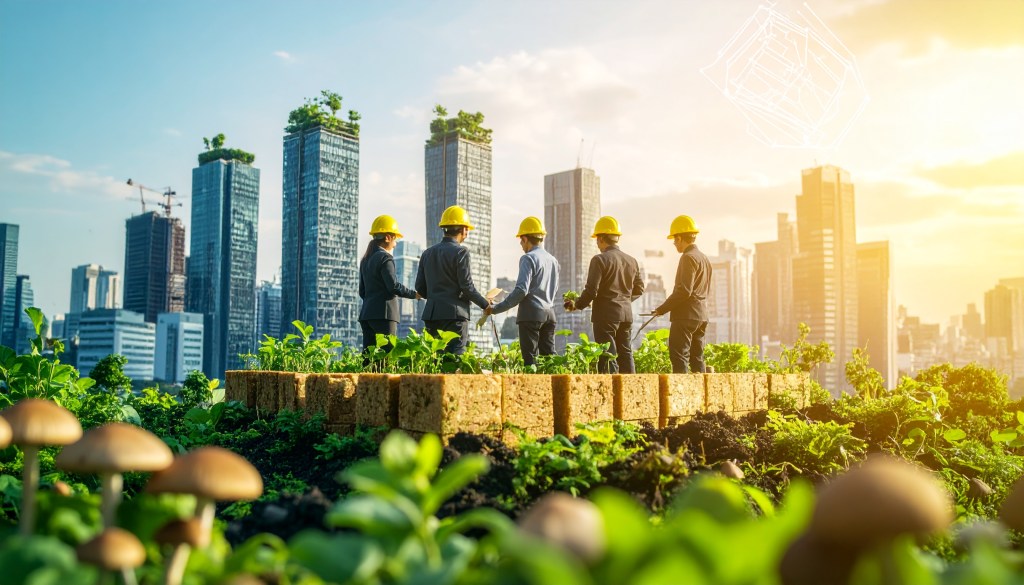
The Learn About and Watch trend explored fungi’s potential, from sustainable food (e.g., mushroom farms over livestock) to environmental cleanup, like breaking down plastics or treating post-wildfire soil. Fungal bricks from toxic rubble could revolutionise construction, reducing costs and waste.
Hurtado’s foresight approach in the interview supported monitoring such signals, advocating scenario planning to test their urban impact. She noted emerging tech, like fungi, requires long-term observation to integrate effectively. This lesson reveals economic potential: cities adopting fungal innovations could lead in green industries, attracting investment and jobs. By preparing for bio-based materials, urban areas can reduce reliance on scarce resources, driving construction and food sectors while boosting economic resilience through sustainable practices.
Lesson 5: Space planning informs Earth’s urban resilience strategies
The report’s Learn About and Watch trend examined planners’ roles in lunar or Martian settlements, drawing from earthly lessons like underground dwellings for protection. This reframes Earth planning, urging gratitude for its resources and proactive climate strategies.
Hurtado’s interview reinforced this, advocating multiple futures to anticipate challenges like climate risks. Her emphasis on dynamic plans ensures cities pivot as trends emerge, like space-inspired resilience. This lesson underscores economic benefits: foresight-driven planning positions cities as innovation leaders, attracting R&D investment. By learning from extreme environments, urban areas can develop robust infrastructure, enhancing economic stability against floods or storms, ensuring long-term growth in a volatile world.
Reflecting on this week’s What is the future for cities? podcast, episode 351’s 2025 Trend Report provided a structured lens on urban shifts across timescales, from housing mismatches to fungi innovations. Episode 352’s interview with Petra Hurtado enriched this with foresight strategies, emphasising dynamic planning for resilience. Five lessons emerged: flexible zoning for demographic shifts, balanced tech strategies for digital fatigue, multi-generational workplace planning, fungi’s sustainable potential, and space-informed resilience. These align with 2025’s focus on AI, climate adaptation, and workforce evolution, offering cities tools to boost economic vitality. Hurtado’s call for scenario planning resonates, urging planners to anticipate rather than react, ensuring cities thrive amid rapid change.
The challenge lies in integrating these trends into actionable policies, fostering innovation-driven economies while maintaining liveable urban spaces.
Share your thoughts: what trend will shape your city’s future?

Next week we are investigating urban mobility and education with an innovative mindset, with Andrew J Cary!
Share your thoughts – I’m at wtf4cities@gmail.com or @WTF4Cities on Twitter/X.
Subscribe to the What is The Future for Cities? podcast for more insights, and let’s keep exploring what’s next for our cities.
 What is The Future for Cities? Podcast
Leave a comment