This week, What is The Future for Cities? podcast offered a thought-provoking exploration of how parenting can influence urban futures. Episode 339 summarised The Sovereign Child: A Radically Noncoercive Approach to Parenting by Aaron Stupple and Logan Chipkin, while episode 340 featured an interview with the authors. Drawing on the philosophies of Karl Popper and David Deutsch, the episodes challenge conventional parenting and propose a noncoercive approach that could empower children to become creative urban innovators. Here are five key lessons we learned about raising children to shape dynamic, future-ready cities.
Noncoercive parenting fosters autonomy for urban problem-solvers
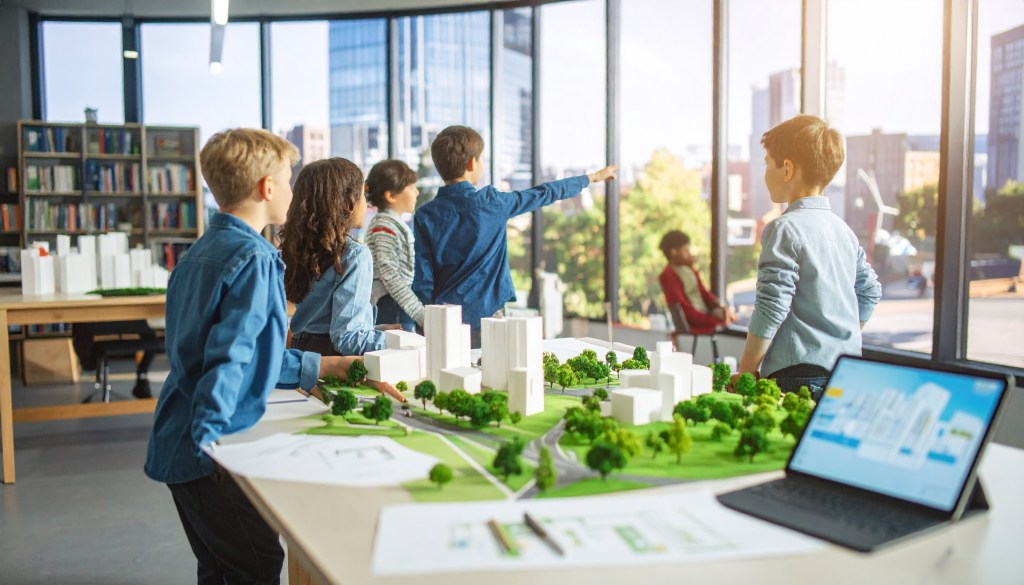
The Sovereign Child argues that traditional rule-based parenting, with its emphasis on obedience, can stifle a child’s natural drive to learn and solve problems. Instead, the book advocates for noncoercive parenting, inspired by the Taking Children Seriously (TCS) philosophy co-founded by David Deutsch and Sarah Fitz-Claridge. This approach treats children as individuals with inherent curiosity, capable of making choices about fundamental aspects like food, sleep, and learning.
In episode 339, the podcast highlighted how giving children autonomy – for example, letting them choose what to eat from healthy options – helps them develop self-awareness and an internal locus of control. This sense of agency is crucial for future adults who can tackle complex urban challenges, such as designing inclusive public spaces or innovating transport systems. Stupple, a father of five, explained in episode 340 that autonomy doesn’t mean neglect; parents can support safety and provide resources while respecting children’s decisions, even in dense urban environments.
This lesson suggests that cities could benefit from citizens raised to trust their judgment and take initiative, rather than relying on external rules. Imagine urban planners who, as children, learned to negotiate solutions collaboratively rather than follow arbitrary directives. Noncoercive parenting could lay the groundwork for such problem-solvers, making cities more adaptive and innovative.
Cities as learning machines require free-thinking children
A standout concept from episode 340 is the idea of cities as “learning machines.” Stupple and Chipkin, drawing on Deutsch’s ideas, argued that traditional schools limit children’s engagement with the real world. They propose unschooling, where children learn through voluntary exploration of their environment, particularly in cities. Unlike rural settings, cities offer dense networks of people, businesses, and opportunities, making them ideal for children to encounter and solve real-world problems.
Stupple shared a personal anecdote about taking his young children to McDonald’s, teaching them to view it as a “robot” they can operate with a credit card. This perspective empowers kids to see urban systems – from restaurants to subways – as tools for learning and agency. Chipkin added that cities could become richer if children were integrated as active participants, not just consumers, apprenticing with professionals like guitarists or mechanics during the day.
This lesson underscores that cities thrive when their inhabitants are curious and adaptable. By raising children to explore cities freely, we could foster a generation of urban innovators who see challenges like traffic congestion or housing shortages as opportunities for creative solutions.
Collaborative problem-solving trumps rules for urban relationships
Both episodes emphasised replacing rules with collaborative problem-solving, a core TCS principle. Episode 339 illustrated this with an example: instead of punishing a child for drawing on a wall, parents should understand the child’s desire (e.g., to create large art) and find a win-win solution, like providing a big roll of paper. This approach teaches communication, negotiation, and empathy – skills vital for urban living.
In episode 340, Stupple extended this to sibling conflicts, suggesting parents avoid imposing solutions and let children negotiate disputes themselves (with safety ensured). This builds interpersonal skills like compromise and boundary-setting, which are essential for navigating diverse urban communities. Chipkin noted that rules often breed resentment, creating adults who feel controlled rather than empowered, which could hinder collaborative urban projects like community gardens or public transport initiatives.
This lesson highlights that cities, with their dense social interactions, need residents who can collaborate effectively. Noncoercive parenting fosters these skills early, preparing children to contribute to harmonious and innovative urban ecosystems.
Children’s emotions are signals for urban innovation
Episode 339 introduced the idea that emotions, even negative ones like anger, are valuable signals of underlying problems. Rather than suppressing a child’s frustration, parents should explore its cause and address it collaboratively. This builds emotional intelligence, which Stupple and Chipkin in episode 340 linked to well-being and healthy relationships – both critical for thriving in urban environments.
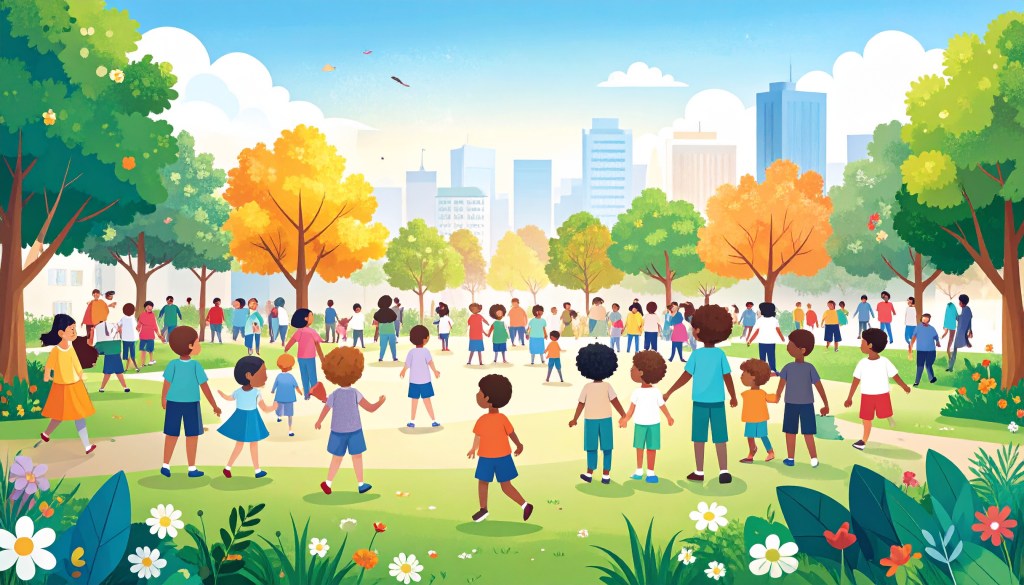
For example, a child upset about a lack of playgrounds in their neighbourhood might be expressing a legitimate urban design flaw. By taking their emotions seriously, parents can encourage them to propose solutions, like advocating for green spaces. This aligns with the podcast’s broader theme of children as knowledge creators, capable of contributing to urban planning if given the chance.
This lesson suggests that cities could become more responsive if future generations are raised to view emotions as opportunities for problem-solving. Emotional intelligence, nurtured through noncoercive parenting, could lead to more empathetic urban policies and designs.
Static societies delay progress in children’s urban roles
A profound insight from episode 340 was why noncoercive parenting remains rare: static societies rely on controlling children to perpetuate unchanging norms. Stupple explained that children are key to maintaining cultural taboos, as they carry ideas across generations. Historically, this meant indoctrinating kids to conform, delaying recognition of their full personhood, unlike advancements in rights for women or minorities.
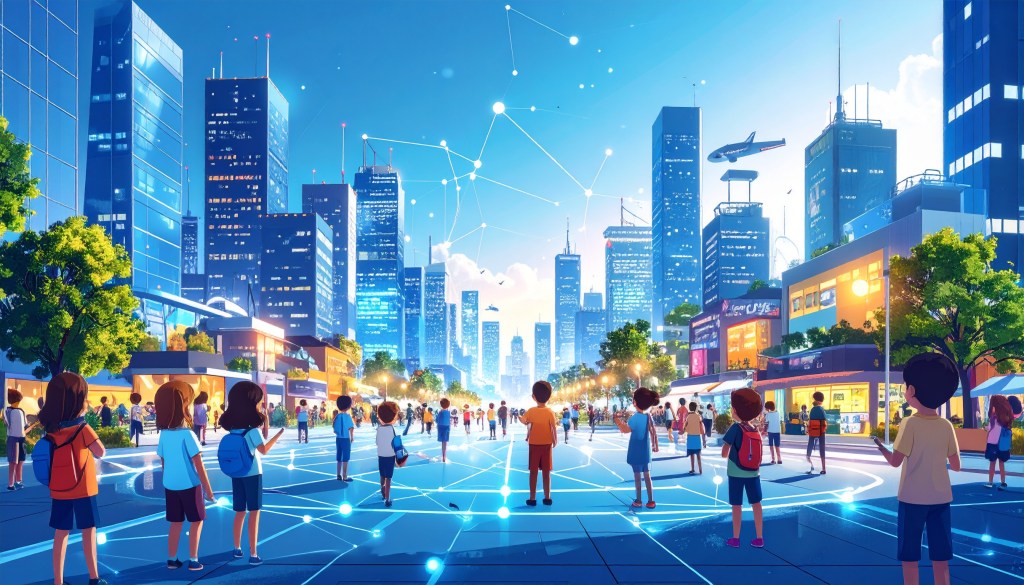
Chipkin added that children lack the ability to advocate for themselves, unlike other groups, making it harder to challenge coercive norms. However, cities, with their networking potential, could change this. The interview envisioned children organising in urban settings, perhaps even protesting for their rights, though societal resistance would likely be strong initially.
This lesson reveals a barrier to urban progress: outdated views of children as passive limit their contributions to cities. By adopting noncoercive parenting, we could unlock their potential as urban innovators, creating dynamic cities that evolve with new ideas.
Applying these lessons to urban futures
These five lessons – fostering autonomy, viewing cities as learning machines, prioritising collaborative problem-solving, valuing emotions, and challenging static norms – offer a roadmap for raising children who can transform cities. The Sovereign Child and the podcast episodes argue (339 and 340) that noncoercive parenting isn’t just about better childhoods; it’s about creating adults who think critically, collaborate effectively, and innovate boldly in urban contexts.
For urban planners, architects, and policymakers, these insights suggest a shift in perspective. Cities should be designed with children as active participants, not just future adults. This could mean more accessible public spaces, opportunities for kids to engage with local businesses, or platforms for young voices in urban planning. For parents, it’s a call to trust children’s curiosity and involve them in city life, from navigating public transport to contributing ideas for community projects.
The What is The Future for Cities? podcast this week challenged us to rethink parenting as a foundation for urban innovation. Aaron Stupple and Logan Chipkin’s ideas, explained in The Sovereign Child, remind us that children are not empty vessels but knowledge creators with the potential to shape vibrant, adaptive cities. By raising them with autonomy, collaboration, and emotional awareness, we can build urban futures that are not only functional but also deeply human.
What struck you most about these ideas?
How could noncoercive parenting change the cities you live in?
The future of cities starts with kids – let’s build it together.
Next week we are getting into the importance of spatial language for cities and communities with a research about urban horizontal vs vertical growth and an interview with Keller Easterling!
Share your thoughts – I’m at wtf4cities@gmail.com or @WTF4Cities on Twitter/X.
Subscribe to the What is The Future for Cities? podcast for more insights, and let’s keep exploring what’s next for our cities.
 What is The Future for Cities? Podcast
Leave a comment